
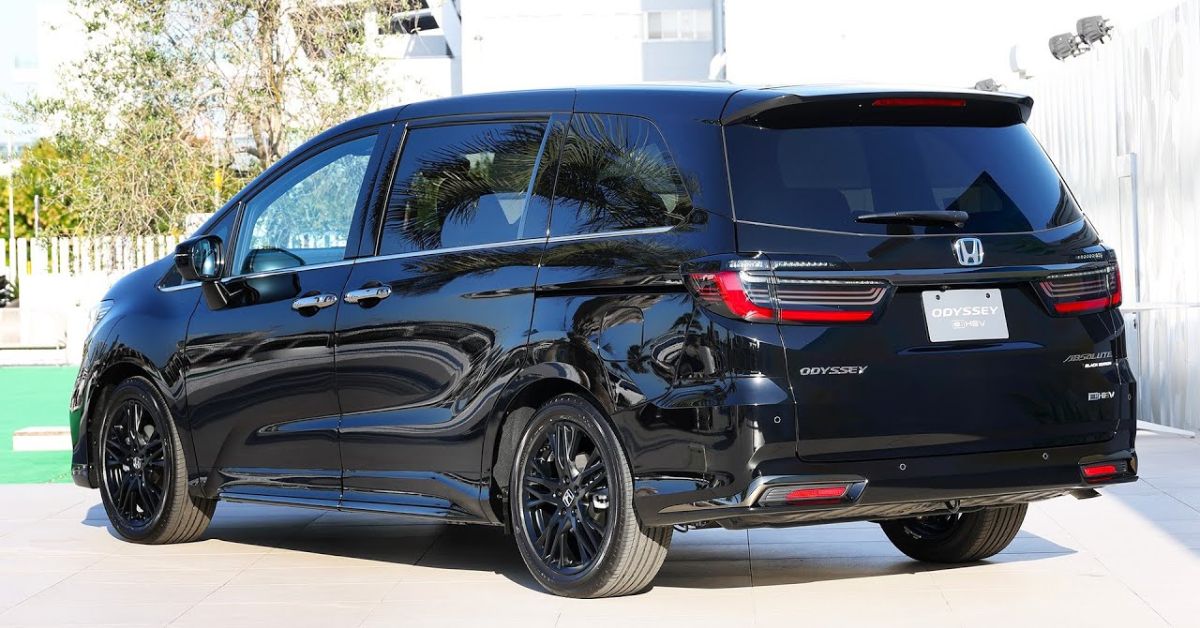
The Honda Odyssey has long been a staple in the minivan segment, offering families a blend of practicality, comfort, and Honda’s reputation for reliability. In Japan, however, the Odyssey has faced declining interest in recent years, especially as competition intensifies from Toyota and Nissan. With the launch of the 2026 Odyssey e:HEV, Honda has attempted to refresh its hybrid minivan offering—but the changes are subtle, and the market response remains cautious.
What’s New in 2026
Honda’s update to the Odyssey e:HEV is modest, focusing on convenience and aesthetics rather than mechanical innovation.
- Rear sunshades: Now standard, providing added comfort for passengers.
- Diamond Dust Pearl paint option: Exclusive to the Black Edition trim, designed to evoke shimmering ice crystals.
- Price increase of ¥286,000 ($1,800): Despite minimal updates, the cost has risen significantly.
These updates are incremental rather than transformative, leaving many to wonder if they justify the higher price tag.
Powertrain and Efficiency
The Odyssey e:HEV continues to use Honda’s 2.0L hybrid powertrain paired with an e-CVT transmission.

- Strong hybrid system: Balances electric and petrol power for efficiency.
- Estimated mileage: Around 24–26 km/l, competitive for a large family vehicle.
- Smooth driving experience: Prioritizes comfort over performance.
While efficient, the powertrain remains unchanged from previous years, which may disappoint buyers expecting more innovation.
Interior Comfort and Features
Honda has always emphasized family-friendly interiors, and the Odyssey e:HEV retains its reputation for spaciousness and premium features.
- 7- and 8-seater configurations: Flexible layouts for different family needs.
- Captain seats with ottoman function: Available in higher trims, offering luxury comfort.
- 12.3-inch infotainment system: Supports wireless Android Auto and Apple CarPlay.
- Dual sunroof/panoramic roof: Enhances cabin ambience.
These features ensure the Odyssey remains a comfortable and practical choice, though they are largely carried over from the 2025 model.
Market Positioning
The Odyssey e:HEV faces stiff competition in Japan’s minivan market.

- Toyota Alphard and Vellfire: Popular luxury minivans with strong brand appeal.
- Nissan Serena e-Power: Offers advanced hybrid technology at competitive pricing.
- Honda’s challenge: Differentiating the Odyssey with minimal updates and a higher price.
Honda’s decision to raise the price despite limited changes could hinder its ability to attract new buyers.
Risks and Challenges
The 2026 Odyssey e:HEV highlights several challenges for Honda:
- Weak consumer interest: Sales have been declining, and minor updates may not reverse the trend.
- Price sensitivity: Families may opt for competitors offering more value.
- Global disconnect: The Japanese Odyssey differs significantly from the North American version, limiting global appeal.
- Regulatory pressures: As electrification accelerates, Honda may need to invest more aggressively in full EVs.
These risks underscore the need for Honda to rethink its strategy in the minivan segment.
Conclusion
The 2026 Honda Odyssey e:HEV offers incremental updates—rear sunshades and a new paint option—paired with a significant price increase. While the hybrid powertrain remains efficient and the interior continues to deliver comfort, the lack of substantial innovation raises questions about its competitiveness.

For loyal Honda customers, the Odyssey e:HEV still represents reliability and practicality. However, in a market dominated by Toyota and Nissan, Honda’s cautious approach may not be enough to reignite enthusiasm. The Odyssey’s future in Japan will depend on whether Honda can balance tradition with bold innovation.