
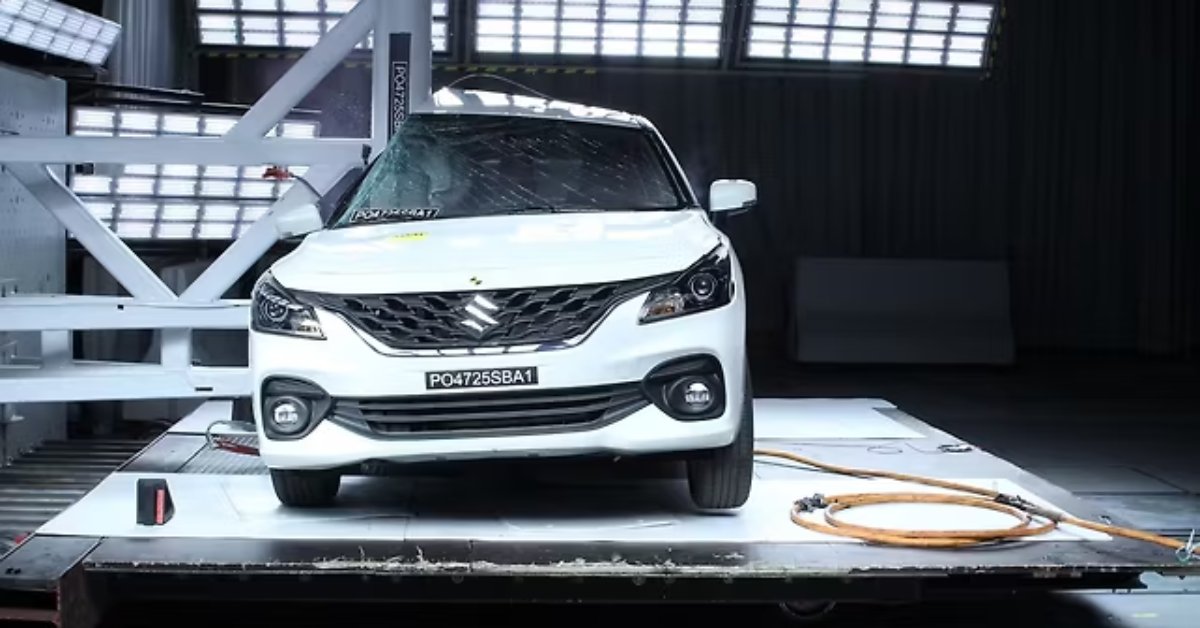
The Made-in-India Suzuki Baleno has recently come under the spotlight after scoring a 1-star rating in the Latin NCAP crash test. This result has sparked discussions around vehicle safety, export standards, and how global crash ratings should be interpreted by Indian car buyers. The Baleno has long been one of Suzuki’s most popular premium hatchbacks, known for its stylish design, fuel efficiency, and practicality. However, safety ratings often play a crucial role in shaping consumer perception, especially in today’s more informed automotive market.
This blog takes a detailed look at what the Latin NCAP rating actually means, how the tested model differs from the Indian-spec Baleno, and whether this result should influence buying decisions in India.
Understanding Latin NCAP and Its Purpose
Latin NCAP is an independent vehicle safety assessment program that evaluates cars sold in Latin American and Caribbean markets. The crash tests assess adult occupant protection, child occupant protection, and the presence of safety assist technologies.
While Latin NCAP follows globally recognized testing protocols, it is important to note that ratings apply specifically to the exact variant tested, including its safety equipment and structural configuration. Therefore, results may not directly represent models sold in other regions unless the specifications are identical.
Why the Made-in-India Baleno Was Tested
Suzuki exports the Baleno from India to several international markets, including Latin America. The tested model was a Made-in-India export-spec Baleno, built to meet regulations and pricing expectations of that region.
The crash test result reflects the safety configuration of the export variant rather than a universal assessment of all Baleno models worldwide.
Key Reasons Behind the 1-Star Rating
The 1-star rating for the Suzuki Baleno in Latin NCAP was influenced by multiple factors. One of the main concerns highlighted was the limited safety equipment offered in the tested variant. In particular, the absence or limited availability of advanced safety assist features played a major role in lowering the overall score.

Structural performance and protection levels for adult and child occupants were also assessed under strict testing conditions. While the structure may have remained stable in certain impacts, overall protection levels were not sufficient to score higher under Latin NCAP’s evaluation criteria.
How Safety Ratings Are Calculated
Crash test ratings are not based solely on how well a car withstands a frontal impact. Modern NCAP programs evaluate:
- Adult occupant protection
- Child occupant protection
- Pedestrian protection
- Safety assist technologies
A low score in one area can significantly affect the final star rating. In the case of the Baleno, the lack of advanced driver assistance systems and limited safety features contributed heavily to the final result.
Is the Indian-Spec Baleno the Same?
One of the most important questions for Indian buyers is whether this rating applies to the Baleno sold in India. The answer is not necessarily.
The Indian-spec Baleno comes with safety features that may differ from the export version tested by Latin NCAP. Additionally, India has its own regulatory requirements and upcoming safety assessment frameworks that influence vehicle specifications.
However, the rating does raise broader concerns about how different safety standards and equipment levels are applied across markets.
Growing Safety Awareness Among Indian Buyers
In recent years, Indian consumers have become far more safety-conscious. Buyers now actively consider crash ratings, airbag counts, and structural integrity before making a purchase.

The Baleno’s Latin NCAP result serves as a reminder that safety is not just about brand reputation or popularity but also about tangible engineering and equipment choices.
Maruti Suzuki’s Safety Direction
Maruti Suzuki has made noticeable efforts to improve safety across its lineup in recent years. Standard safety features have expanded, and newer platforms are designed with improved crash protection.
However, balancing affordability and safety remains a challenge in price-sensitive markets. The Baleno’s crash test outcome highlights the importance of continuing investment in safety, especially for models sold globally.
Impact on Brand Image and Export Strategy
For Suzuki, safety ratings in international markets can influence brand perception beyond sales numbers. A low crash test score may prompt the company to re-evaluate export specifications, safety equipment strategies, and long-term product planning.
Such results also encourage manufacturers to adopt a more unified global safety standard rather than tailoring safety levels solely based on market pricing.
What Buyers Should Take Away from This
For potential buyers, the key takeaway is not to panic but to stay informed. Crash test ratings should be understood in context—considering the specific variant tested, the safety features included, and regional differences.
Indian buyers should:

- Check safety features offered in their chosen variant
- Stay informed about upcoming safety norms
- Balance budget considerations with long-term safety value
The Bigger Picture: Safety as a Priority
The Suzuki Baleno’s 1-star Latin NCAP rating reflects a broader industry challenge rather than a single product failure. As safety standards evolve globally, automakers must adapt quickly to meet rising expectations.
For consumers, increased transparency and awareness will continue to drive demand for safer vehicles, ultimately benefiting the entire market.
Conclusion
The Made-in-India Suzuki Baleno scoring 1 star in Latin NCAP is an important development that underscores the growing importance of vehicle safety in global markets. While the rating applies to a specific export variant, it opens up essential discussions around safety standards, equipment consistency, and buyer awareness.
As Indian car buyers become more informed, safety will play an even bigger role in shaping purchasing decisions. For manufacturers, the message is clear—investing in safety is no longer optional but essential for long-term trust and success.