
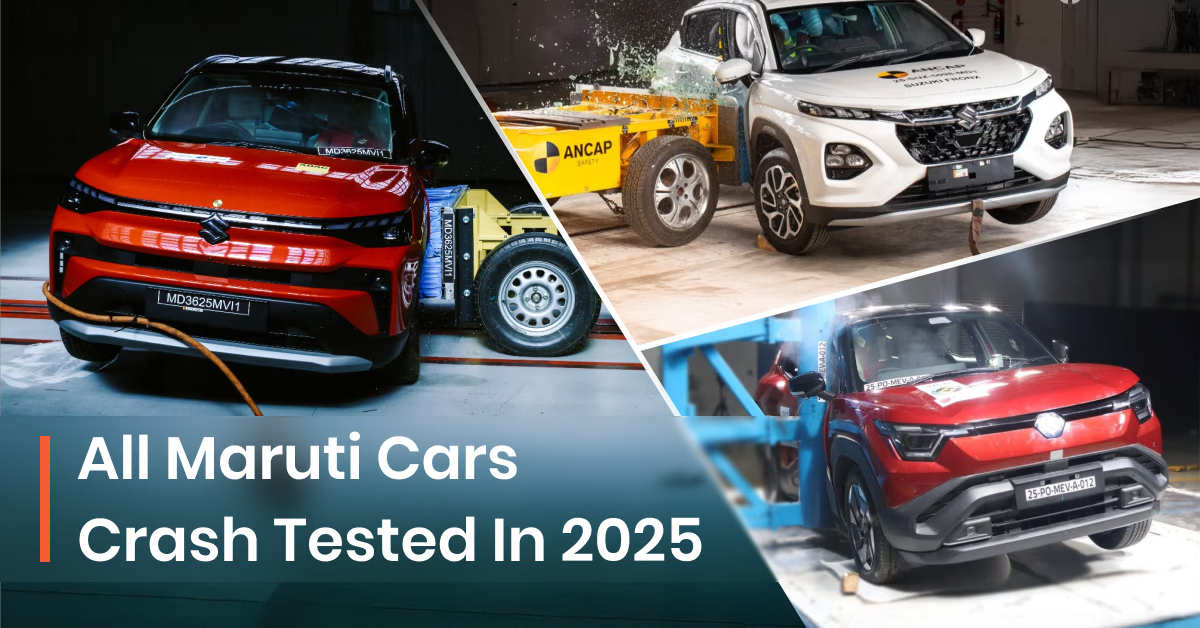
In 2025, vehicle safety has become a top decision-making factor for Indian car buyers. Rising awareness, stricter regulations, and evolving crash test norms have pushed manufacturers to improve structural integrity and safety technology. Maruti Suzuki, India’s largest car manufacturer, has had multiple models evaluated by different NCAP agencies this year, offering buyers clear insights into real-world crash performance.
Crash test ratings provide an unbiased assessment of adult occupant protection, child safety, structural strength, airbag effectiveness, and electronic safety systems. In this detailed report, we break down how Maruti Suzuki cars performed in 2025 across various NCAP programs and what these results mean for buyers.
Understanding NCAP Crash Tests
Before diving into individual models, it’s important to understand what NCAP ratings represent.
NCAP agencies evaluate vehicles on:
- Frontal and side impact protection
- Structural stability
- Airbag deployment efficiency
- Child seat anchorage and safety
- Electronic stability control
- Advanced driver assistance systems
A higher star rating indicates better crashworthiness and lower injury risk, which directly impacts insurance premiums, resale value, and family safety.
5-Star Safety Performers: Maruti Suzuki’s Best in 2025
Maruti Suzuki Dzire (2025 Model)
The Dzire emerged as one of the strongest safety performers in Maruti’s lineup in 2025. It achieved a 5-star safety rating, showcasing major improvements in body shell integrity and restraint systems.
Key safety strengths:
- Stable passenger compartment
- Six airbags in higher variants
- Strong chest and head protection
- Excellent child occupant safety
The Dzire’s performance signals a major shift in Maruti Suzuki’s approach toward premium safety engineering.
Maruti Suzuki e-Vitara (Electric SUV)
The electric e-Vitara also secured a 5-star crash rating, highlighting Tata-rivaling safety credentials in the EV space.
Safety highlights:

- Reinforced battery protection structure
- High adult and child safety scores
- Advanced electronic stability systems
- Excellent side impact protection
This result places the e-Vitara among the safest electric SUVs in its segment, improving trust in Maruti’s EV strategy.
4-Star Safety Cars: Balanced Protection
Maruti Suzuki Baleno
The Baleno showed significant improvement in 2025, earning up to 4 stars in newer safety evaluations.
Key points:
- Improved structural strength
- Better frontal crash performance
- Enhanced airbag coverage
- Improved child seat compatibility
The Baleno’s rating proves that facelifts and safety upgrades can drastically improve crash results.
Maruti Suzuki Fronx
The Fronx received mixed but respectable safety scores, landing in the 3 to 4-star range depending on testing standards.
Safety performance overview:
- Good adult occupant protection
- Adequate side impact performance
- Slight limitations in rear-seat safety
Despite this, the Fronx remains a strong urban crossover choice with decent crash protection.
3-Star Safety Segment: Entry-Level Protection
Maruti Suzuki Swift
The Swift demonstrated average crash safety, scoring around 3 stars.
Strengths:
- Good frontal crash absorption
- Decent head and leg protection
Limitations:

- Marginal chest protection
- Rear-seat safety could be improved
While still acceptable, buyers prioritizing maximum safety may consider higher-rated alternatives.
Maruti Suzuki Celerio (6-Airbag Version)
The Celerio’s safety rating improved significantly when equipped with six airbags.
Crash performance:
- Better side impact protection
- Improved adult safety score
- Child safety remains moderate
This proves that additional airbags directly impact NCAP scores, even in budget cars.
Lower Safety Ratings: Models That Need Improvement
Maruti Suzuki Ciaz
The Ciaz recorded a lower adult safety rating, despite offering reasonable child protection.
Concerns:
- Weak frontal structural performance
- Limited advanced safety tech
- Outdated platform architecture
This highlights the need for platform updates or structural reinforcements in older models.
Older Entry-Level Variants
Some base variants without side airbags or ESC were rated lower, underlining the importance of choosing higher trims with full safety kits.
Why Maruti Suzuki’s 2025 Safety Results Matter
1. Insurance & Premium Impact
Cars with higher crash ratings often attract lower insurance premiums, making them financially smarter long-term purchases.
2. Resale Value
Vehicles with strong NCAP scores retain better resale value, especially in urban markets.

3. Family Protection
High crash ratings directly translate to lower injury risk, especially for children and elderly passengers.
Maruti Suzuki’s Safety Evolution in 2025
2025 clearly marks a turning point for Maruti Suzuki:
- Increased use of high-strength steel
- Wider availability of six airbags
- Improved crash structure design
- Focus on child safety systems
While not all models scored equally, the brand is clearly moving toward global safety standards.
What Buyers Should Do Before Purchasing
- Always choose variants with six airbags and ESC
- Compare NCAP ratings, not just features
- Prioritize structural safety over mileage alone
- Consider long-term safety over short-term savings
Final Verdict: Is Maruti Suzuki Safer in 2025?
Yes — Maruti Suzuki is significantly safer in 2025 than ever before. With multiple 5-star rated cars, improved mid-segment safety, and better entry-level protection, the brand has taken meaningful steps toward improving road safety.
However, safety performance still varies by model and variant. Buyers must choose wisely and prioritize crash-tested trims to ensure maximum protection.
If safety is your top priority, Maruti Suzuki now offers credible, crash-tested options across multiple segments.