
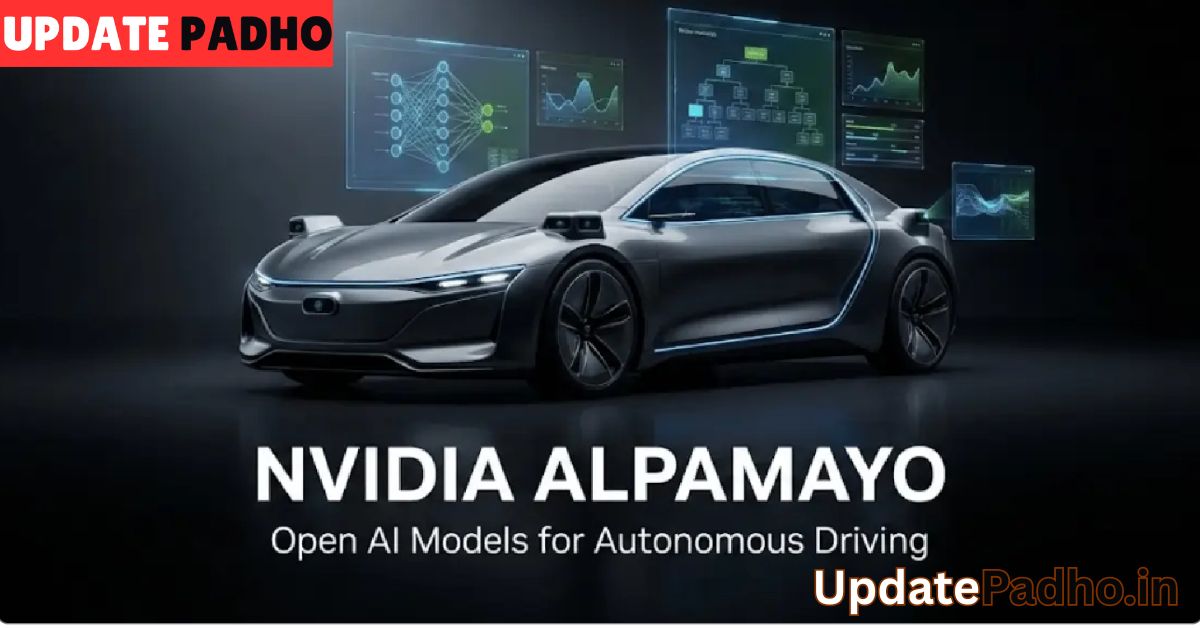
At CES 2026, Nvidia announced the launch of Alpamayo, a groundbreaking suite of open-source AI models, simulation tools, and datasets. Named after the iconic Peruvian mountain, Alpamayo symbolizes strength, adaptability, and vision—qualities Nvidia hopes to embed into the next generation of autonomous systems. With Alpamayo, Nvidia is tackling one of the hardest challenges in AI: enabling machines to reason, plan, and act safely in unpredictable real-world environments.
What Is Alpamayo?
Alpamayo is a family of reasoning-based Vision Language Action (VLA) models and supporting tools designed to help autonomous vehicles and robots “think like humans.”
- Alpamayo 1: A 10-billion-parameter reasoning model that integrates perception, language, and action.
- AlpaSim: Simulation tools for testing autonomous systems in rare and complex driving scenarios.
- Physical AI Datasets: Open-source datasets that allow developers to train and validate models across diverse conditions.
Together, these components form a comprehensive ecosystem for building safe, scalable, and explainable AI systems.

Why Alpamayo Matters
Traditional AI models excel at pattern recognition but struggle with long-tail events—rare, unpredictable scenarios like a child running into the street or unusual weather conditions. Alpamayo addresses this by:
- Reasoning Beyond Perception: Instead of just recognizing objects, Alpamayo models can reason about context and consequences.
- Human-Like Judgment: Enables autonomous vehicles to explain decisions, improving transparency and trust.
- Safety and Robustness: Reduces risks in autonomous driving by preparing systems for edge cases.
This marks what Nvidia CEO Jensen Huang described as the “ChatGPT moment for physical AI”—machines that don’t just see but also understand and act.
Key Applications
1. Autonomous Vehicles
- Alpamayo helps cars handle rare driving scenarios safely.
- Partners like Jaguar Land Rover, Lucid, and Uber are already exploring Alpamayo for Level 4 autonomy roadmaps.
2. Robotics
- Robots equipped with Alpamayo can adapt to unexpected conditions in warehouses, factories, and homes.
- Enhanced reasoning allows robots to explain actions, improving human-machine collaboration.
3. Industrial AI
- Alpamayo supports decision-making in complex environments like energy grids, logistics, and manufacturing.
- Simulation tools allow stress-testing before deployment.
Comparison: Alpamayo vs Traditional AI
| Feature | Traditional AI Models | Nvidia Alpamayo |
|---|---|---|
| Focus | Pattern recognition | Reasoning + action |
| Handling rare scenarios | Weak | Strong (long-tail events) |
| Transparency | Limited | Explainable decisions |
| Scalability | Narrow applications | Broad ecosystem (vehicles, robots, industry) |
| Availability | Proprietary | Open-source suite |
Challenges and Considerations
While Alpamayo is a leap forward, challenges remain:

- Computational Demands: Large reasoning models require significant compute power.
- Cybersecurity Risks: Open-source tools must be safeguarded against misuse.
- Standardization: Industry-wide adoption depends on common frameworks and regulations.
The Road Ahead
Alpamayo represents Nvidia’s vision of safe, reasoning-based AI for the real world. By making these models open-source, Nvidia empowers developers, researchers, and automakers to collaborate on building trustworthy autonomous systems.
In the coming years, Alpamayo could become the foundation for Level 4 and Level 5 autonomy, reshaping transportation, robotics, and industrial automation. For consumers, this means vehicles and machines that are not only smarter but also safer, more reliable, and more transparent.
Conclusion
The unveiling of Alpamayo marks a paradigm shift in AI development. By focusing on reasoning, safety, and openness, Nvidia is setting the stage for machines that can truly operate in the unpredictable complexity of the real world.

As autonomous vehicles and robots move closer to mainstream adoption, Alpamayo could be remembered as the moment when AI stopped being just reactive and started becoming thoughtful, explainable, and human-like in judgment.