
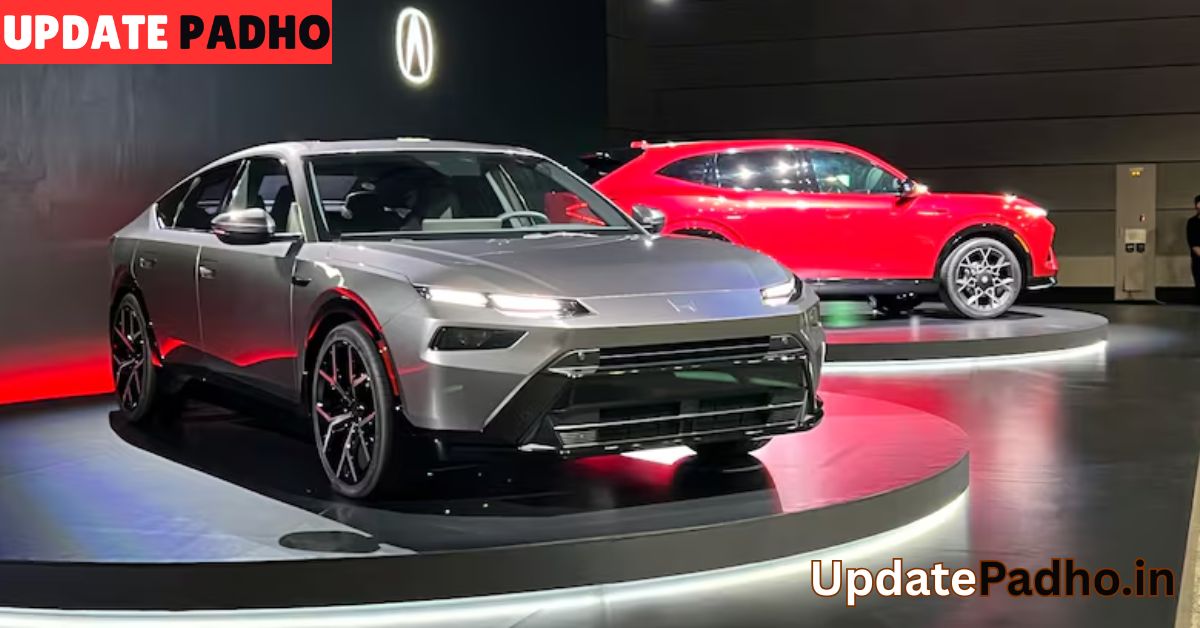
In a move that has sent ripples through the automotive industry, Honda recently unveiled its Hybrid Sedan Prototype during a global business briefing in Japan. For those who have been following the brand’s roadmap, this reveal is more than just a new car; it represents a seismic shift in strategy. After pulling back on several high-profile electric vehicle (EV) programs earlier this year, Honda is doubling down on what it does best—hybrids.
The prototype, a sleek, low-slung fastback, offers a glimpse into a future where efficiency doesn’t come at the cost of style. But what exactly makes this prototype so significant for the road ahead?
A Bold Design for a New Direction
At first glance, the Honda Hybrid Sedan Prototype looks remarkably production-ready. Unlike many “flight of fancy” concepts, this vehicle features functional mirrors, windshield wipers, and DOT-style reflectors. Its silhouette is a striking blend of a traditional sedan and a modern fastback, characterized by a dramatically sloped roofline and sharp, angular rear-quarter panels.

Design enthusiasts have noted that it carries the DNA of the current Accord but with a futuristic twist. It sits slightly higher than a typical sedan, leading to speculation that it might bridge the gap between a standard saloon and the more upright stance of a crossover—similar to the trend seen in the Toyota Crown.
The Engineering: “The World’s Most Efficient”
While the exterior is eye-catching, the real magic happens under the hood. Honda is using this prototype to debut its next-generation two-motor hybrid system. The goals set for this powertrain are ambitious:
- 10% Improvement in Fuel Efficiency: Honda aims to push the boundaries of real-world gas mileage beyond its already impressive e:HEV standards.
- 30% Reduction in Production Costs: By streamlining the manufacturing process and hardware, Honda plans to make hybrids more profitable and affordable.
- Electric All-Wheel Drive: The new system will incorporate a separate motor on the rear axle, providing all-weather capability without the mechanical complexity of a traditional driveshaft.
CEO Toshihiro Mibe has been candid about this direction, stating that while EVs remain the long-term goal, the “business viability” of certain EV models proved challenging. Consequently, Honda is reallocating billions of dollars into hybrid development to ensure they remain “highly competitive” against rising global pressure.

Key Specifications & Strategic Goals
| Feature | Next-Gen Hybrid Goal |
| Efficiency | >10% improvement over current models |
| Cost Reduction | 30% lower production costs |
| Drivetrain | Available Electric AWD |
| Market Focus | North America, Japan, India |
| Timeline | Production version expected by 2027–2028 |
Why the Pivot Matters
The automotive landscape in 2026 is vastly different than it was just a few years ago. Consumer adoption of full EVs has leveled off in key markets, and infrastructure hurdles remain a reality for many drivers. Honda’s decision to prioritize hybrids—planning to launch 15 new hybrid models globally by 2030—is a pragmatic response to these market realities.
By focusing on the Hybrid Sedan Prototype, Honda is targeting the heart of the North American market. Whether this prototype eventually wears the “Accord” badge or launches as an entirely new nameplate, it is designed to be the “bridge” that carries loyal customers toward a carbon-neutral future without the “range anxiety” often associated with pure electrics.
The “Unique Honda Driving Experience”
Beyond the numbers, Honda promises that this new platform will further advance a “unique driving experience.” Historically, Honda hybrids have been praised for feeling more like traditional internal combustion cars—avoiding the “rubber band” feel of some CVT-equipped competitors. With the added torque of the next-gen motors and a lower center of gravity from the new platform, the production version of this sedan promises to be as engaging to drive as it is cheap to fuel.

Looking Ahead
The Honda Hybrid Sedan Prototype isn’t just a placeholder; it’s a statement of intent. It proves that Honda isn’t retreating from innovation but rather refining it. By delivering a car that is 10% more efficient and significantly cheaper to build, Honda is positioning itself to regain the crown of the “king of efficiency.”
For the everyday driver, this means a future filled with cars that look like they belong in a sci-fi movie but run on technology that is proven, reliable, and ready for the long haul.