
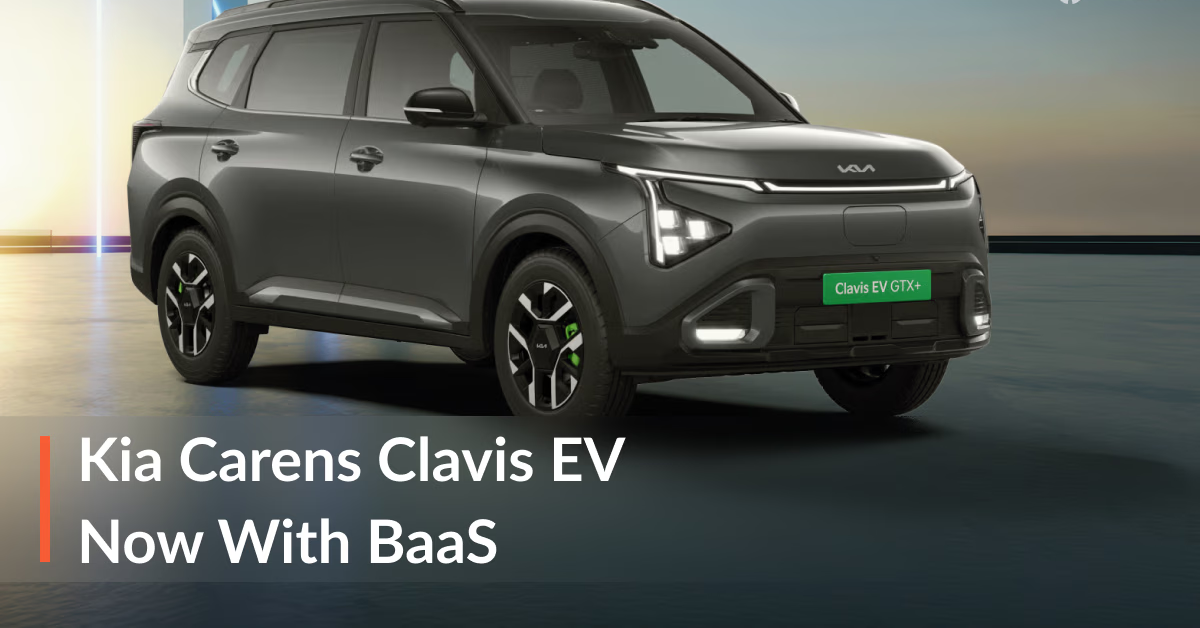
The electric vehicle revolution in India is accelerating rapidly, and automobile manufacturers are now introducing innovative ownership models to make EV adoption more affordable and accessible. In a major step toward transforming electric mobility, Kia has launched a Battery-as-a-Service (BaaS) program for the Carens Clavis EV.
This new battery rental initiative aims to reduce the upfront purchase cost of electric vehicles by separating battery ownership from the vehicle itself. The move reflects a growing global trend where automakers are exploring flexible financing solutions to attract more customers toward sustainable transportation.
The Carens Clavis EV, already expected to be positioned as a premium family-focused electric vehicle, becomes even more attractive with this subscription-based battery model. By lowering the initial investment required for EV ownership, Kia hopes to encourage more buyers to switch from traditional petrol and diesel vehicles to electric mobility.
The BaaS model could potentially become a game-changing strategy in India’s evolving EV market, where affordability remains one of the biggest barriers to mass electric vehicle adoption.
What Is Battery-as-a-Service (BaaS)?
Battery-as-a-Service is an ownership model where customers purchase the electric vehicle without owning the battery pack outright. Instead, the battery is provided on a subscription or rental basis.
This means buyers pay:
- A reduced initial vehicle price
- Monthly or usage-based battery rental charges
The concept is designed to make electric vehicles more financially accessible for a wider range of consumers.
Why Batteries Make EVs Expensive
The battery pack is typically the most expensive component in an electric vehicle.
It significantly contributes to:
- High upfront purchase cost
- Long-term ownership concerns
- Battery replacement anxiety
By separating the battery from the vehicle purchase, automakers can substantially reduce the initial cost of EV ownership.
This makes electric vehicles more appealing to:
- First-time EV buyers
- Budget-conscious families
- Urban commuters
- Fleet operators
Why Kia’s BaaS Strategy Matters
Kia’s decision to introduce a battery rental model for the Carens Clavis EV highlights the changing dynamics of India’s electric vehicle market.
The company appears focused on solving key customer concerns such as:
- High EV pricing
- Battery life worries
- Resale uncertainty
- Maintenance fears
This strategy could significantly improve EV accessibility in India, especially among middle-class buyers looking for affordable premium mobility solutions.
Lower Initial Ownership Cost
One of the biggest advantages of the BaaS model is reduced upfront pricing.
Traditional EV buyers often hesitate because electric cars usually cost more than petrol vehicles during initial purchase.
Battery rental programs can:
- Lower showroom pricing
- Reduce loan burden
- Improve affordability
- Increase financing flexibility
This creates an easier entry point into electric mobility.

Flexible Monthly Payment Structure
The subscription-based approach allows buyers to spread battery expenses over time instead of paying everything upfront.
This provides:
- Better financial planning
- Lower immediate investment
- Predictable monthly expenses
For many families, this can make EV ownership significantly more practical.
Battery Maintenance Benefits
Battery health remains one of the biggest concerns among electric vehicle buyers.
Customers often worry about:
- Battery degradation
- Expensive replacement costs
- Long-term performance
With a battery rental program, the manufacturer or service provider typically manages:
- Battery maintenance
- Health monitoring
- Service support
- Performance assurance
This reduces ownership stress considerably.
Carens Clavis EV: Designed for Modern Families
The Carens Clavis EV is expected to target buyers seeking:
- Spacious interiors
- Premium comfort
- Advanced technology
- Family practicality
- Sustainable mobility
Kia has already built a strong reputation for offering feature-rich vehicles with stylish design and modern infotainment systems.
The EV version is expected to continue this approach while adding:
- Zero-emission driving
- Lower running costs
- Smart connectivity features
Growing Demand for Family Electric Vehicles
India’s EV market is gradually shifting beyond small city cars.
Consumers now want:
- Larger electric SUVs
- Family-oriented EVs
- Premium comfort features
- Longer driving range
The Carens Clavis EV enters the market at a time when buyers are actively exploring spacious electric mobility solutions.
The BaaS program further strengthens its appeal among practical family buyers.
Running Cost Advantages
Electric vehicles already offer lower operating costs compared to petrol and diesel vehicles.
Benefits include:
- Reduced fuel expenses
- Lower maintenance requirements
- Fewer moving parts
- Minimal engine servicing
When combined with battery subscription flexibility, EV ownership becomes even more economically attractive.
Battery Subscription Could Improve EV Resale Value
Resale value concerns often discourage EV purchases.

Buyers worry about:
- Battery aging
- Reduced performance over time
- High replacement expenses
A rental-based battery model may help address these concerns because:
- Battery responsibility shifts away from the owner
- Future buyers may feel more confident
- Vehicle resale becomes less dependent on battery condition
This could positively influence long-term EV market growth.
Smart Mobility Is Becoming the Future
The automotive industry is rapidly moving toward flexible mobility solutions.
Consumers increasingly prefer:
- Subscription models
- Usage-based services
- Lower upfront ownership costs
- Digital mobility ecosystems
Battery-as-a-Service fits perfectly within this evolving transportation landscape.
It transforms car ownership from a fixed-asset purchase into a more flexible service-based experience.
How BaaS Could Accelerate EV Adoption in India
India’s EV market still faces several adoption barriers, including:
- High purchase prices
- Charging infrastructure concerns
- Battery replacement anxiety
Battery rental programs directly address affordability concerns, which remain one of the biggest challenges.
Lower initial pricing could encourage:
- Faster EV penetration
- Greater middle-class adoption
- Expansion of electric mobility in smaller cities
This may significantly influence India’s transition toward cleaner transportation.
Charging Infrastructure Still Matters
While battery subscription improves affordability, charging infrastructure remains essential for EV growth.
Consumers continue to evaluate:
- Home charging convenience
- Public charging availability
- Highway fast-charging networks
Manufacturers introducing EV subscription models will also need strong charging ecosystem support to ensure customer confidence.
Digital Technology and Connected Features
Modern EV buyers expect advanced technology integration.
The Carens Clavis EV is likely to offer:
- Smart infotainment systems
- Connected vehicle features
- Real-time vehicle monitoring
- App-based controls
- Advanced navigation
Digital convenience is becoming a major competitive factor in the EV segment.
Sustainability and Environmental Benefits
Electric vehicles play an important role in reducing:

- Urban air pollution
- Carbon emissions
- Fossil fuel dependence
Battery subscription programs may accelerate adoption rates, indirectly contributing to cleaner transportation ecosystems.
Governments and manufacturers worldwide increasingly support sustainable mobility initiatives.
Challenges of Battery Rental Models
While the BaaS concept offers many benefits, there are also potential concerns.
Long-Term Subscription Costs
Over time, monthly battery payments may accumulate significantly depending on ownership duration.
Usage Restrictions
Some subscription models may include:
- Distance limitations
- Usage conditions
- Specific service agreements
Consumer Awareness
Many buyers are still unfamiliar with battery subscription systems and may require education regarding:
- Ownership terms
- Battery support coverage
- Long-term financial implications
Despite these concerns, the concept remains highly promising for emerging EV markets.
Kia’s Competitive Advantage
Kia’s early adoption of Battery-as-a-Service could provide a strong market advantage.
The company may benefit from:
- Wider customer reach
- Improved EV affordability
- Increased brand innovation perception
- Stronger position in India’s growing electric mobility segment
As competition intensifies, flexible ownership solutions may become a key differentiator in the EV market.
Future of EV Ownership Models
The future automotive market may move beyond traditional ownership structures entirely.
Potential trends include:
- Subscription-based mobility
- Battery leasing
- Vehicle-sharing ecosystems
- AI-driven vehicle services
Battery-as-a-Service could become a foundational part of this transition.
Automakers that adapt early may gain significant long-term benefits.
Final Verdict
Kia’s Battery-as-a-Service program for the Carens Clavis EV represents a major step toward making electric mobility more affordable, practical, and accessible for Indian consumers. By separating battery ownership from vehicle purchase, the company addresses one of the biggest barriers to EV adoption — high upfront pricing.
The model offers several advantages including lower initial costs, flexible payment structures, reduced battery maintenance worries, and improved ownership convenience. For families considering a shift to electric mobility, the Carens Clavis EV combined with the BaaS model could become a highly attractive proposition.
As India’s EV ecosystem continues evolving, innovative solutions like battery rental programs may play a crucial role in accelerating mass electric vehicle adoption and shaping the future of smart, sustainable transportation.