
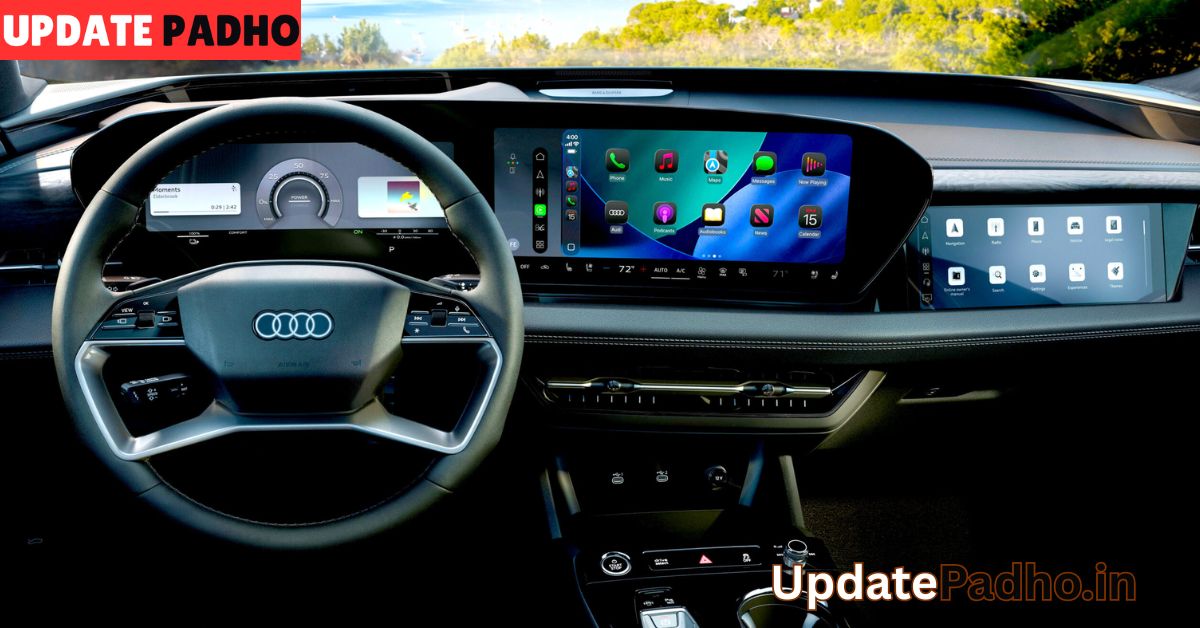
In an era where touchscreens dominate dashboards and digital interfaces have become the norm, Audi’s decision to reintroduce scroll wheels in its latest models is both surprising and refreshing. This move signals a shift in automotive design philosophy—one that acknowledges the importance of tactile control, driver focus, and timeless elegance. But why does this seemingly small design choice matter so much, and what does it reveal about the future of luxury driving?
🎛 The Rise (and Fatigue) of Touchscreens
Over the past decade, automakers have embraced touchscreens as the centerpiece of in-car technology. Sleek, futuristic, and endlessly customizable, they promised convenience and innovation. Yet, many drivers have grown weary of them. Touch interfaces often demand more attention than physical controls, pulling eyes off the road and fingers away from the wheel.
Audi’s scroll wheel revival is a response to this fatigue. It recognizes that while digital displays are powerful, they can’t replace the intuitive feel of a physical dial. A scroll wheel allows drivers to adjust volume, navigate menus, or fine-tune settings without fumbling through layers of touchscreen menus.
🕹 Tactile Satisfaction and Precision
There’s something deeply satisfying about the click of a well-engineered control. Scroll wheels offer precision and feedback that touchscreens simply can’t replicate. For collectors and enthusiasts, this tactile connection enhances the driving experience, making every interaction feel deliberate and refined.

Audi’s design team understands that luxury isn’t just about aesthetics—it’s about how a car feels to use. A scroll wheel embodies craftsmanship, offering resistance, texture, and responsiveness that elevate the sense of control.
🚗 Safety and Focus on the Road
Beyond aesthetics, scroll wheels serve a practical purpose: safety. Studies have shown that physical controls reduce driver distraction compared to touchscreens. With a scroll wheel, drivers can adjust settings by feel, keeping their eyes on the road.
Audi’s decision reflects a growing awareness in the industry that technology should enhance driving, not complicate it. By blending tactile controls with digital displays, Audi creates a balanced interface that prioritizes both innovation and safety.
🏆 A Nod to Heritage
Audi has long been admired for its interiors, often setting benchmarks in design and ergonomics. The return of scroll wheels is a nod to its heritage—an acknowledgment that some traditions are worth preserving. For loyal Audi enthusiasts, this move feels like a reunion with a familiar friend, a reminder of the brand’s commitment to driver-centric design.

💡 The Future of Hybrid Interfaces
Audi’s scroll wheel revival doesn’t mean abandoning touchscreens altogether. Instead, it points toward a hybrid future where physical and digital controls coexist. Imagine a dashboard where a scroll wheel complements a high-resolution display, offering both tactile precision and digital versatility.
This approach could redefine luxury interiors, blending tradition with innovation in a way that feels timeless yet forward-looking.
🌍 Consumer-Centric Design
Ultimately, Audi’s decision reflects a broader trend: listening to consumers. Drivers have voiced frustrations with overly complex touch interfaces, and Audi has responded by reintroducing a feature that prioritizes usability. It’s a reminder that luxury isn’t about chasing trends—it’s about creating experiences that resonate with people.
Conclusion
Audi’s return to scroll wheels may seem like a small design tweak, but it carries big implications. It’s a statement about the value of tactile satisfaction, the importance of safety, and the enduring appeal of heritage. In a world obsessed with digital innovation, Audi has chosen to embrace balance—reminding us that sometimes, the simplest solutions are the most luxurious.

The scroll wheel is back, and with it, a renewed appreciation for the art of driving.