
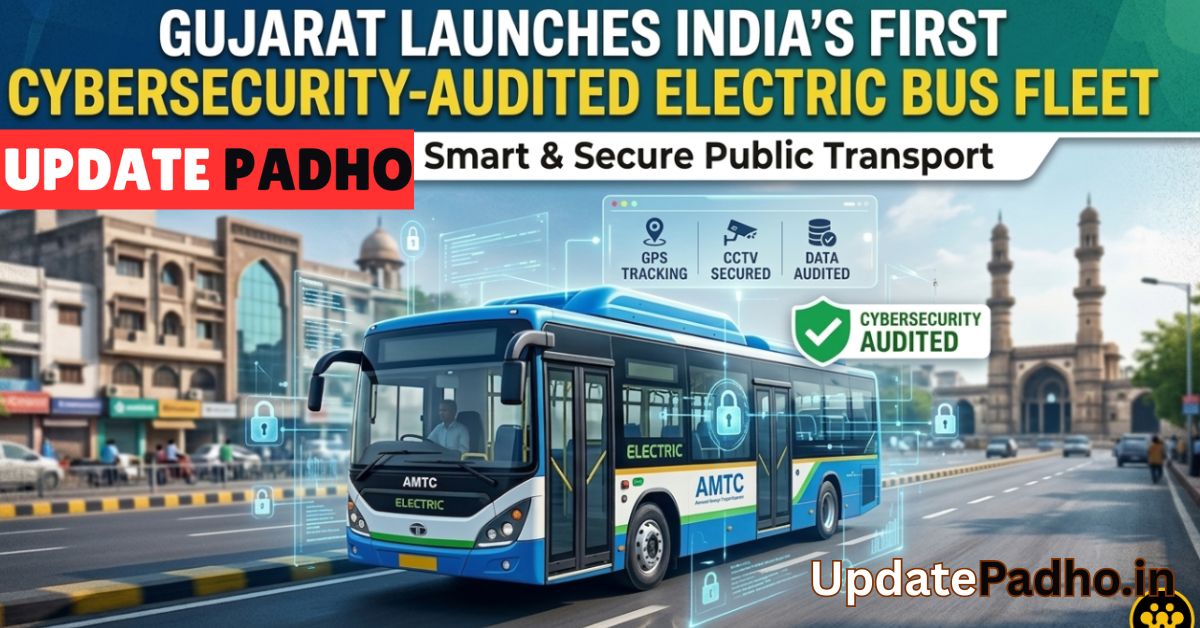
In the heart of Ahmedabad, a new shade of green is hitting the tarmac. But this time cybersecurity, it isn’t just about zero emissions or the quiet hum of an electric motor. On February 13, 2026, Gujarat Chief Minister Bhupendra Patel officially flagged off a fleet of electric buses for the Ahmedabad Municipal Transport Corporation (AMTC) that carries a unique distinction: it is the first connected EV fleet in India to undergo a rigorous, structured cybersecurity audit before deployment.
As our cities transition from traditional combustion engines to “computers on wheels,” Gujarat is sending a clear message: in the age of smart mobility, digital safety is just as critical as mechanical reliability.
Why Audit a Bus? The Digital Vulnerability of Modern Transit
To the average commuter, a bus is a way to get from Point A to Point B. To a hacker, however, a modern electric bus is a complex network of data points. These new AMTC Midi AC Electric buses are equipped with an Intelligent Transport Management System (ITMS) that manages:
- Real-time GPS tracking for fleet management.
- Passenger Information Systems (PIS) and digital LED displays.
- CCTV surveillance and Mobile Network Video Recorders (mNVR).
- Emergency panic buttons for passenger safety.
- Automated payment systems based on run-kilometer calculations.
If these systems are compromised, the consequences range from data breaches and privacy violations to the potential remote manipulation of vehicle functions. By subjecting the fleet to a “gray-box” penetration test, Gujarat is treating cybersecurity as a core safety component—on par with braking systems or battery management.

Setting the Standard: The Audit Details
The audit was a collaborative effort between GlobalLogic (a Hitachi Group company) and IRCLASS Systems and Solutions (ISSPL). It wasn’t just a simple software check; it was a deep dive into the vehicle’s “nervous system.”
1. Global Compliance
The assessment followed international and national benchmarks to ensure the highest level of resilience:
- ISO/SAE 21434: The global gold standard for cybersecurity engineering in road vehicles.
- AIS-189: The Indian regulatory requirement specifically governing cybersecurity for connected vehicles.
- UN R155 Annex 5: International threat scenarios that account for global hacking trends.
2. Comprehensive Coverage
The “audit” covered every possible entry point for a cyberattack. This included the in-vehicle networks, firmware components, APIs, web portals, and even the data storage infrastructure. By identifying vulnerabilities in these modules before the buses hit the road, the AMTC can ensure that passenger data remains private and operational schedules remain uninterrupted.
A Blueprint for India’s EV Revolution
Gujarat has long been a leader in industrial innovation, and this move sets a vital benchmark for the rest of the country. As India pushes toward the PM E-DRIVE goals and massive electrification of Public Transport Undertakings (STUs), the “Ahmedabad Model” offers three key lessons for the industry:

Security by Design
Rather than patching security holes after a breach occurs, this initiative proves the value of Security by Design. By validating the fleet during the procurement and deployment phase, the government reduces long-term risks and builds public trust in new technology.
Protecting the “Smart City” Infrastructure
Connected buses are part of a larger ecosystem. They communicate with charging stations, traffic signals, and central command centers. A secure bus fleet acts as a firewall, preventing a localized vehicle hack from escalating into a city-wide infrastructure crisis.
Digital Resilience is Non-Negotiable
As noted by Piyush Jha of GlobalLogic, as public transport becomes “smarter,” cybersecurity is no longer an optional “extra”—it is a prerequisite. The transition to green mobility must be a transition to secure mobility.
The Road Ahead
The launch of these cybersecurity-audited buses in Ahmedabad is more than just a local transit update; it is a milestone in India’s digital evolution. These BRT-compatible Midi AC buses represent a future where commuters don’t have to choose between sustainability and safety.

As Chief Minister Bhupendra Patel highlighted during the inauguration, Gujarat is committed to leading India’s transition toward intelligent mobility. By layering robust cybersecurity frameworks over eco-friendly transport, the state is ensuring that the road to a “Viksit Bharat” is paved with both green energy and digital ironclad security.