
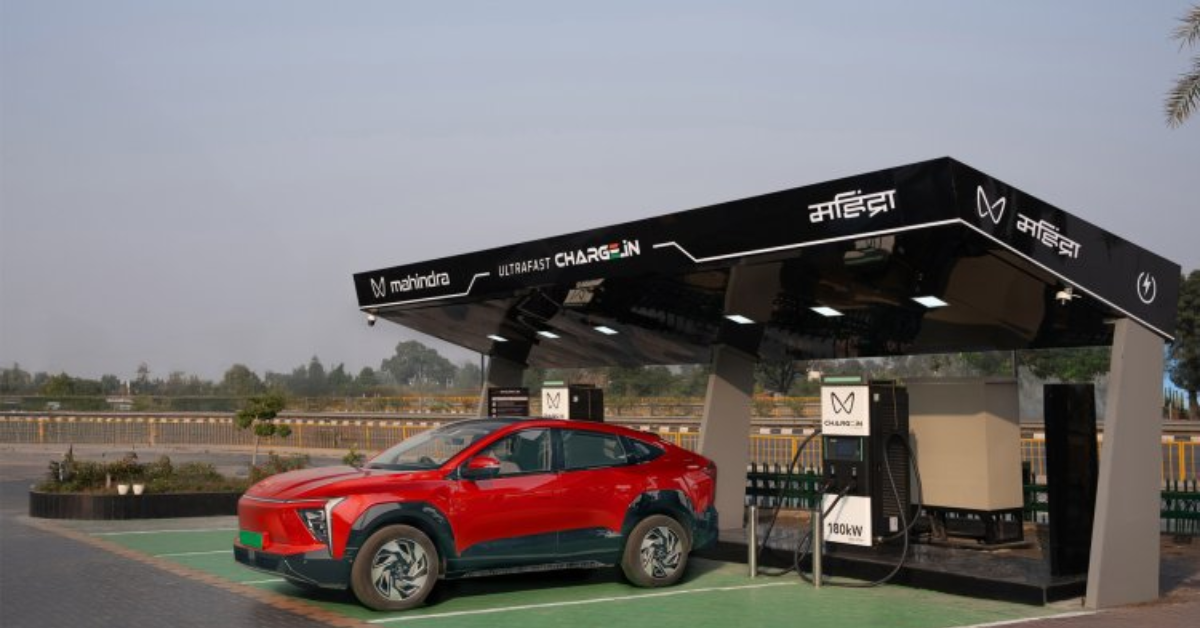
Mahindra, a name long associated with rugged SUVs and India’s homegrown automotive spirit, has now turned its gaze toward the electric horizon. In a major announcement, the company revealed plans to install 250 ultrafast EV charging stations across India by 2027.
It is more than an infrastructure project—it is a signal, a flare shot into the sky, declaring that India’s electric future is not just coming; it is already crackling at the edges.
This ambitious move steps beyond corporate growth and into the realm of national transformation. With EV adoption rising and consumers demanding faster, easier charging, Mahindra seems ready to stitch together a backbone for India’s evolving electric ecosystem.
Let’s journey into what this plan means, why it matters, and how it could reshape the way India moves.
A Bold Commitment in an Electrifying Era
The world is racing towards cleaner mobility, and India stands at its own crossroads. EV sales have surged dramatically, and policy pushes have made the shift almost inevitable. Yet, one problem continues to haunt electric mobility like a stubborn shadow—charging infrastructure.
Mahindra’s promise of 250 ultrafast chargers feels like someone finally turning on a series of lighthouse beacons along a foggy coastline.
These chargers aren’t regular ones—they are ultrafast, designed to refuel electric vehicles in minutes rather than hours. For Indian drivers who often travel long distances and deal with unpredictable conditions, this upgrade could become a quiet revolution in convenience.
2027 may seem a little distance away, but building an infrastructure of this magnitude requires patience, precision, and deep coordination across industries and regions.
Why Ultrafast Chargers Are a Game-Changer
To understand the significance of Mahindra’s plan, it helps to grasp the power of ultrafast charging.
A conventional slow charger is like sipping water through a straw—adequate but time-consuming.
A fast charger is like using a faucet—much quicker.
But an ultrafast charger? That’s a high-pressure stream built to replenish energy in a flash.
Ultrafast stations can:

- Charge compatible EVs from 20% to 80% in under 30 minutes
- Enable intercity travel without long delays
- Reduce range anxiety drastically
- Support high-performance EVs with larger batteries
- Encourage adoption among hesitant customers
In essence, these chargers transform EVs from “city-bound vehicles” to true long-distance companions.
Mahindra’s upcoming portfolio, including the Born Electric (BE) series, stands to benefit immensely from such a grid.
Where Mahindra Plans to Build the Charging Network
While locations are yet to be formally listed, the expected deployment pattern follows India’s emerging EV map:
1. National Highways and Intercity Corridors
This is the spinal cord of the network.
Placing ultrafast chargers along highways enables smooth long-distance travel, opening the door to electric road trips and commercial EV logistics.
2. Urban Hubs and Tier-1 Cities
Metros such as Mumbai, Delhi, Bengaluru, Hyderabad, and Chennai already have early EV adopters.
High-speed chargers here reduce charging queues and support growing urban demand.
3. Tier-2 Cities: India’s Silent Electric Frontier
Cities like Jaipur, Indore, Surat, Coimbatore, and Patna are witnessing fast EV adoption.
Installing ultrafast chargers here expands accessibility beyond metropolitan bubbles.
4. Tourist and Transit Destinations
Hill stations, business hubs, airports, and hospitality zones—perfect places for EV drivers to recharge while they rest.
Mahindra’s approach appears to be a blend of practicality and vision, like stitching bright electric ribbons across India’s diverse roads.
Supporting the Born Electric Revolution
Mahindra’s EV lineup is set to grow rapidly over the next few years, including:
- BE.05
- BE.07
- BE.09
- XUV.e8
- XUV.e9
These vehicles come with larger battery packs and high-performance architectures.
But for such EVs to thrive, India needs chargers that match their pace.

Mahindra’s infrastructure plan ensures:
- Faster adoption of its upcoming electric SUVs
- Greater confidence among premium EV buyers
- Reduced dependency on third-party charging networks
- A unified charging experience tailored for Mahindra vehicles
Essentially, the charging stations become the backbone supporting the company’s electric dreams.
A Step Toward Energy Independence and Cleaner Roads
India’s cities breathe under the weight of pollution.
Each EV on the road is a small exhale of relief, but mass adoption requires a strong charging blanket. Mahindra’s plan lays a foundation not just for business growth but for environmental recovery.
Benefits include:
- Lower dependence on fossil fuels
- Reduced vehicular emissions
- Boost to renewable energy integration
- Sustainable long-term mobility
Ultrafast chargers help accelerate India’s transition to a cleaner, quieter, more breathable tomorrow.
A Boost to the Charging Industry and Local Economies
Mahindra’s investment will generate ripple effects:
1. More Jobs
Installation, maintenance, energy management—new roles sprout across states.
2. Partnerships and Collaborations
Energy companies, grid operators, real estate developers, and tech firms will join hands.
3. Market Confidence
When a major automaker invests, others follow.
This could ignite a wave of EV infrastructure growth across India.
4. Growth of Auxiliary Industries
Battery tech, charging software, payment platforms, and smart grid solutions will flourish.

Like a spark thrown into a dry forest, this move can ignite entire industries, not just charging stations.
Challenges Mahindra Must Navigate
While the plan is bold, the path is not free of bumps:
- High setup costs for ultrafast chargers
- Power grid limitations in certain regions
- Need for standardised charging protocols
- Land acquisition and permissions
- Ensuring easy access and maintenance
Yet Mahindra has a legacy of tackling complexities head-on, often turning obstacles into steppingstones.
What This Means for EV Users
For current and future electric vehicle owners, Mahindra’s plan translates into:
- Shorter charging waits
- Long-distance EV travel becoming practical
- More confidence while driving in unfamiliar regions
- Easier access to high-quality charging points
- Enhanced reliability for commercial EV fleets
It’s the difference between planning your travel “around charging” and simply charging “around your travel”.
Final Thoughts
Mahindra’s decision to install 250 ultrafast EV charging stations by 2027 is a significant milestone in India’s electric mobility timeline.
It’s not just infrastructure—it’s an invitation to step into a smarter, cleaner age.
A map is being redrawn, quietly but firmly, with electric arteries branching through the country.
This investment positions Mahindra not as a follower but as an architect of India’s EV transformation.
As the grid expands, it promises a future where electric journeys feel seamless, fast, and confidently powered.
In the soft hum of these upcoming chargers, one can almost hear the pulse of the future—steady, bright, and full of movement. ⚡🚘🌍