
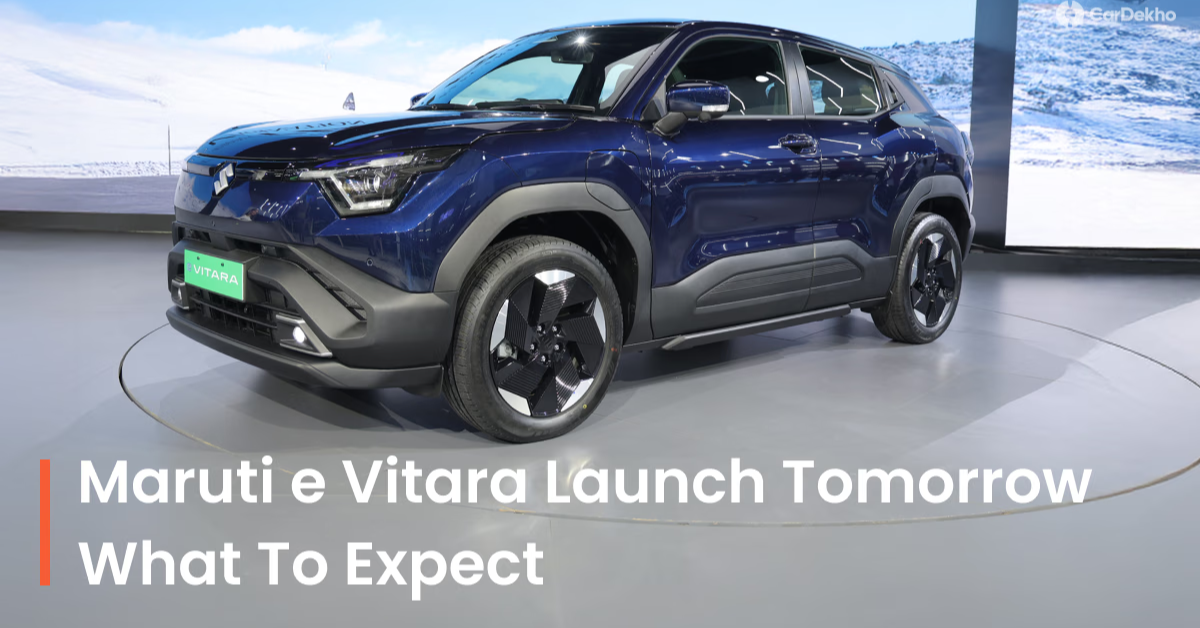
Tomorrow, India’s largest carmaker is about to plug into a new chapter. The much-anticipated Maruti e-Vitara, the brand’s first all-electric compact SUV, is ready to make its official debut. For a country where EV adoption is turning from a ripple into a strong tide, this launch feels like a moment stitched into the future. Maruti Suzuki, known for shaping mass mobility in India for decades, is finally stepping into the electric lane — and expectations are soaring.
The e-Vitara isn’t just another EV launch. It represents a strategic turn for Maruti, a brand that has mastered affordability, reliability, and mass appeal. Now, it aims to carry those same pillars into an electric avatar designed for Indian roads, Indian families, and Indian price sensitivity.
As the countdown clicks toward tomorrow, here’s a clear, comprehensive, 1000-word guide to everything that matters before the curtains rise — the top 5 things you need to know about the upcoming Maruti e-Vitara.
1. A Fresh All-Electric Platform Tailored for India
Unlike some EVs built on slightly modified ICE platforms, the Maruti e-Vitara is expected to ride on Maruti’s EV-dedicated architecture, co-developed with Toyota. This gives it a stronger battery layout, safer structure, and optimized interior space — the kind of engineering that whispers confidence rather than shouting gimmicks.
What makes this significant?
- More cabin room: With the battery tucked neatly into a purpose-built floor, the e-Vitara is expected to offer better legroom and seating comfort.
- Improved safety: New-gen EV platforms are generally stiffer, offering improved crash protection.
- Better driving dynamics: A lower center of gravity provides stable handling, especially during quick turns and high-speed commutes.
For a country with unpredictable road textures, sudden speed breakers, and bumper-to-bumper traffic, this EV-first architecture is a smart move.
2. Long-Range Battery Designed for Daily Commuting and Weekend Drives
The biggest question Indian consumers ask before buying an EV is simple: Kitna chalti hai?
Sources indicate the e-Vitara will offer a driving range between 350 km and 420 km on a full charge, depending on the variant. This takes it clear past range anxiety territory for most buyers.

Battery & charging expectations
- Fast charging support: Likely 30–80% in under an hour, ideal for quick top-ups during mall visits or chai breaks on highways.
- Home charging convenience: A standard charger for overnight replenishment.
- Optimized battery management: Maruti has been focusing on long-term durability, meaning the battery should age gracefully, resisting early degradation.
For everyday commuters who travel 20–40 km a day, a single charge can last an entire workweek. For weekend travellers, the range is well within comfort for most popular highways.
3. A Design Language That Blends Familiarity with Future
The e-Vitara takes inspiration from its petrol sibling but doesn’t shy away from its electric identity. Expect subtle electric accents — illuminated elements, aerodynamic panels, a closed front grille, and stylish LED treatments.
This design strategy is deliberate. Maruti wants to keep the SUV familiar enough for traditional buyers while still offering a sense of electric modernity.
Exterior highlights expected
- Sculpted bumper with EV-exclusive patterns
- Slim LED DRLs connected with a light bar
- Dual-tone paint options
- Aero-optimized alloy wheels
- Charging port neatly integrated into the front or side fender
Interior experience
Inside, the e-Vitara will likely follow a clean and contemporary design theme:
- A floating touchscreen infotainment system
- EV-specific UI that shows battery, range, regenerative braking levels
- Panoramic sunroof in higher variants
- Wireless charging, ventilated seats, and premium finish options
The overall aesthetic aims to feel like stepping into a small slice of tomorrow, without abandoning Maruti’s everyday practicality.
4. Loaded Features & Smart Tech — Maruti Enters the EV Tech Race
Maruti Suzuki has been conservative with features in some recent models, but the e-Vitara is expected to break that mold.
Key features anticipated
- ADAS Level 2, including lane keep assist, adaptive cruise control, blind spot detection
- Connected car technology with remote AC, charge scheduling, real-time range, geo-fencing
- Digital driver display
- Multiple drive modes — Eco, Normal, Sport
- Regenerative braking levels for efficiency customization
- 360-degree camera with parking assist
- Voice-controlled smart assistant
This tech stack places the e-Vitara in direct competition with Tata Nexon EV, MG ZS EV, and Hyundai Kona — making it Maruti’s most feature-rich vehicle yet.
5. Expected Pricing Strategy — Maruti’s Biggest Trump Card
Pricing is where Maruti plans to land its punch. The brand understands India’s EV sensitivity, and it knows buyers want electric cars without the premium shock.
Expected price range:
₹11.99 lakh to ₹17.99 lakh (ex-showroom) depending on variants.
If the e-Vitara lands anywhere close to this pricing bracket, it will instantly unsettle the compact EV SUV segment. Maruti’s nationwide sales and service network will only amplify the impact — an advantage no competitor can easily replicate.
Why pricing is crucial
- It brings EVs to middle-class households.
- It converts petrol–diesel switchers into confident EV buyers.
- It pushes competitors to rethink pricing, ultimately benefiting the entire market.
With smart positioning, the e-Vitara could soon be seen in malls, gated societies, office parking, and highways across the country.
🌱 A Bigger Picture: What the e-Vitara Means for India
Tomorrow’s launch is more than a product reveal. It signals:
✔ Maruti’s full-fledged entry into EVs
The company that mobilized India in petrol and CNG now steps into the electric chapter.
✔ A shift in mass-market EV acceptance
People trust Maruti for low running costs, durability, and resale value — factors that will boost first-time EV buyers.

✔ A push for charging infrastructure growth
With a best-selling brand entering EVs, charging networks are expected to expand faster.
✔ A new competition wave
Tata, Mahindra, MG, and Hyundai will now face a formidable challenger in the EV space.
🏁 Final Thoughts: A Big Switch Gets Closer
Tomorrow, when the Maruti e-Vitara finally rolls into the spotlight, it won’t just be another electric SUV; it will be a symbolic ignition — a spark lighting India’s mainstream EV movement. Maruti’s move feels like a quiet but steady current running across the automotive landscape, nudging India toward a cleaner, future-ready mobility chapter.
If Maruti delivers on range, features, practicality, and pricing, the e-Vitara may become the EV equivalent of the Swift or Brezza — a familiar companion that slips into everyday life with ease.
Tomorrow’s launch isn’t just awaited. It’s anticipated. And perhaps, a little celebrated already.