
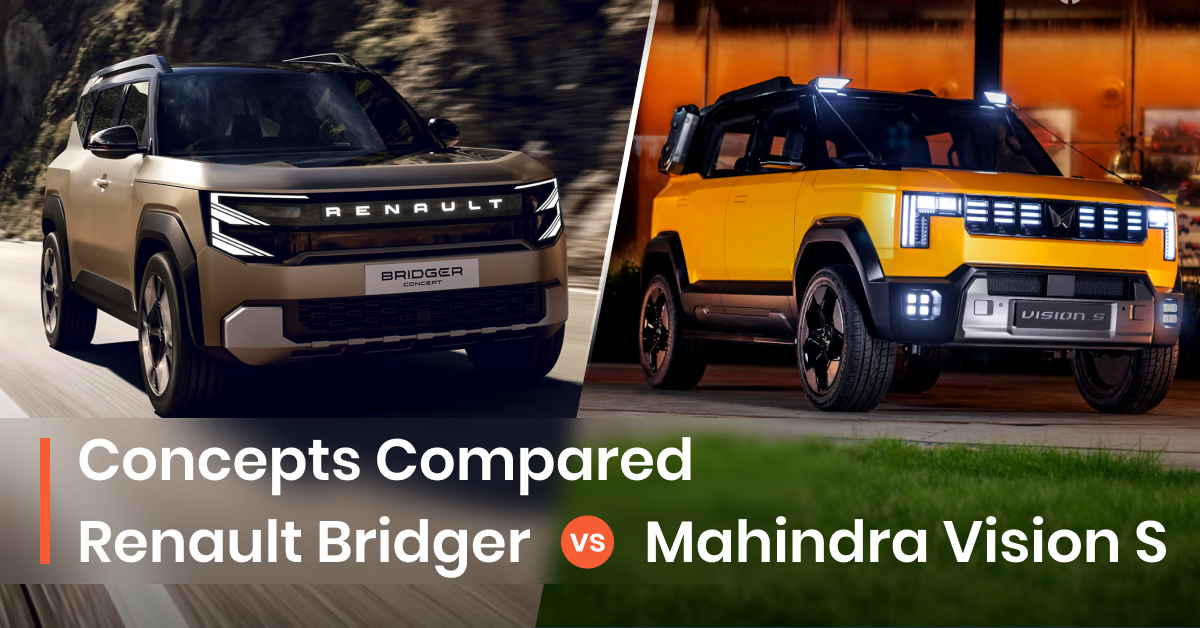
The SUV market is evolving faster than ever, with car manufacturers introducing futuristic concept vehicles that hint at the next generation of automotive design. Among the latest concept SUVs grabbing attention are the Renault Bridger Concept and the Mahindra Vision S.
Both of these vehicles represent the bold design direction their companies are taking for future SUVs. While they share the same purpose—showcasing innovation and cutting-edge styling—their design philosophies are very different.
The Bridger concept focuses on rugged minimalism and practical SUV styling, whereas the Vision S embraces a futuristic, muscular, and technology-driven design language.
In this detailed comparison, we explore the front styling, side profile, rear design, interior layout, and overall visual appeal of these two exciting concept SUVs.
Design Philosophy: Practical vs Futuristic
Concept cars often reveal how a brand wants its future vehicles to look.
The Renault has designed the Bridger with a clean, modern, and adventure-ready look. Its design emphasizes practicality, durability, and a rugged personality suited for outdoor lifestyles.
On the other hand, Mahindra & Mahindra has taken a more futuristic approach with the Vision S. The concept blends aggressive styling with advanced lighting elements and modern technology to create a bold visual statement.
These contrasting design philosophies make both SUVs unique in their own way.
Front Design Comparison
The front design is often the most noticeable aspect of any SUV.
Renault Bridger Front Design
The Bridger concept features a bold yet simple front fascia that reflects Renault’s modern design language.
Key highlights include:
- A wide grille with illuminated Renault branding
- Sharp LED headlamps with modern DRL patterns
- A muscular front bumper
- Prominent skid plate for an off-road look
The front styling gives the Bridger a strong and rugged personality, making it look ready for adventure.
Mahindra Vision S Front Design
The Vision S adopts a far more futuristic appearance.

Its front design includes:
- Split LED headlight setup
- Vertical LED daytime running lights
- Illuminated grille elements
- Futuristic lighting patterns
This design creates a bold and aggressive road presence, making the Vision S appear more experimental and advanced than the Bridger.
Side Profile and Body Styling
The side view reveals how differently these SUVs are designed.
Renault Bridger Side Design
The Bridger emphasizes simplicity and muscular proportions.
Important design elements include:
- Large wheel arches
- Protective body cladding
- Strong shoulder lines
- Stylish alloy wheels
Another interesting design feature is the hidden rear door handles, which create a sleek and sporty appearance.
Overall, the Bridger’s side profile looks clean, practical, and adventure-ready.
Mahindra Vision S Side Design
The Vision S takes a more aggressive and adventurous approach.
Key highlights include:
- Boxy SUV proportions
- Flush door handles
- Camera-based side mirrors
- Large rugged wheels
- Roof-mounted accessories
Some versions of the concept even include accessories like external storage elements and off-road equipment, emphasizing its lifestyle SUV character.
The side design makes the Vision S look tougher and more futuristic than the Bridger.
Rear Design Comparison
The rear styling further highlights the contrast between these two concept SUVs.
Renault Bridger Rear Design
The rear design of the Bridger continues its rugged theme.

Key features include:
- Tailgate-mounted spare wheel
- Slim LED tail lamps
- Upright SUV stance
- Strong bumper design
These design elements give the Bridger a classic off-road SUV look with modern styling touches.
Mahindra Vision S Rear Design
The Vision S has a more dramatic rear design.
Notable elements include:
- Futuristic LED tail lights
- Pixel-inspired lighting elements
- Large rugged bumper
- Tailgate-mounted spare wheel with protective cover
This design creates a bold and high-tech rear appearance, reinforcing the SUV’s futuristic identity.
Interior Layout and Technology
Although concept interiors are often experimental, both SUVs give us a glimpse of future cabin designs.
Renault Bridger Interior
The Bridger concept focuses on a minimalist and practical interior layout.
Expected features include:
- Digital instrument cluster
- Large infotainment screen
- Premium upholstery
- Spacious seating layout
- Functional storage areas
The cabin design appears simple, modern, and user-friendly, prioritizing comfort and practicality.
Mahindra Vision S Interior
The Vision S interior looks more advanced and futuristic.
Key interior highlights include:
- Dual digital displays on the dashboard
- Touch-based climate controls
- Wireless smartphone charging
- Premium leather seating
- Futuristic steering wheel design
The interior design reflects Mahindra’s vision for next-generation smart SUVs with connected technology.
SUV Character and Lifestyle Appeal
Both concept vehicles are designed to appeal to buyers who love adventure and modern technology.

The Bridger focuses on practical adventure styling, making it suitable for drivers who want a rugged SUV that looks capable and reliable.
The Vision S, however, pushes design boundaries with bold styling, futuristic lighting, and experimental features.
This difference makes the Bridger feel more realistic for production, while the Vision S feels more like a glimpse into the future of SUV design.
Which Concept SUV Looks Better?
Choosing the better design depends largely on personal taste.
Why Some Buyers May Prefer the Bridger
- Cleaner and simpler design
- Strong off-road personality
- Practical styling elements
- Modern but not overly futuristic
Why Others May Prefer the Vision S
- More aggressive and futuristic appearance
- Advanced lighting technology
- Bold SUV proportions
- High-tech interior layout
The Bridger offers a balanced mix of ruggedness and simplicity, while the Vision S delivers dramatic styling and futuristic innovation.
Final Verdict
Both the Renault Bridger Concept and the Mahindra Vision S showcase exciting possibilities for the future of SUVs.
The Bridger focuses on practical adventure styling and minimalist design, making it feel closer to a production-ready vehicle. In contrast, the Vision S pushes the boundaries with bold futuristic elements and advanced technology.
Ultimately, these two concept SUVs highlight how automakers are reimagining the SUV segment with innovative design, modern technology, and lifestyle-focused features.
As the automotive industry moves toward electrification and smart mobility, vehicles like the Bridger and Vision S provide an exciting preview of what the next generation of SUVs could look like.