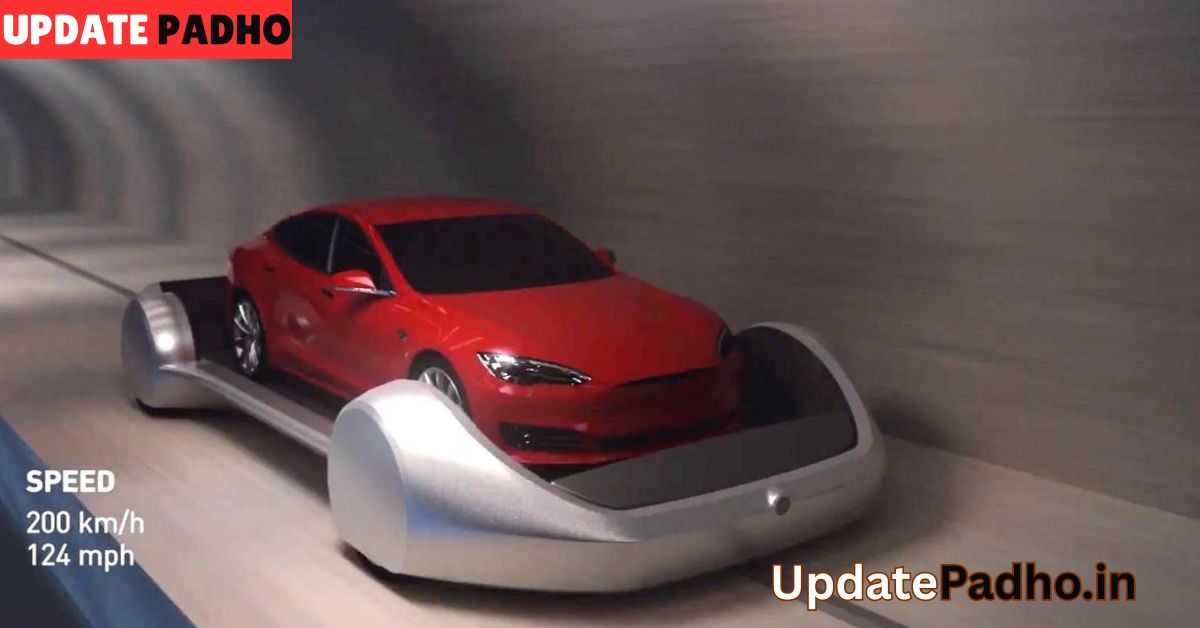
Urban congestion is one of the biggest challenges modern cities face. Traditional solutions like subways and buses often struggle with overcrowding, delays, and inefficiency. Enter Tesla’s underground car model, a futuristic transportation system pioneered by Elon Musk’s Boring Company. Known as the Vegas Loop, this innovation uses Tesla vehicles in underground tunnels to transport passengers quickly, safely, and sustainably.
🌟 What Is the Tesla Underground Model?
The underground model is essentially a network of tunnels designed to move Tesla cars at high speeds beneath city streets. Unlike subways, which stop at every station, the Loop allows passengers to travel directly to their destination without intermediate stops.
Key features:

- All-electric Tesla vehicles (Model X and Model Y) used for transport.
- Speeds up to 150 mph, compared to 65 mph for conventional subway trains.
- Zero emissions, thanks to Tesla’s electric drivetrain.
- Compact tunnels, reducing construction costs compared to traditional subway systems.
🚗 How Does It Work?
Passengers enter stations located across the city, board a Tesla vehicle, and are driven through tunnels directly to their chosen stop. The system is designed to feel more like an underground highway than a subway.
- Current operation: The Las Vegas Convention Center (LVCC Loop) connects multiple points across the campus, with extensions reaching hotels like Resorts World and Encore.
- Future expansion: Plans include 109 km of tunnels and over 100 stations across Las Vegas, connecting major casinos, the airport, and downtown.
⚡ Benefits of Tesla’s Underground Model
- Speed and Efficiency
- Direct routes mean shorter travel times.
- No waiting for trains or buses; cars depart continuously.
- Sustainability
- Fully electric vehicles reduce carbon emissions.
- Smaller tunnels minimize environmental disruption during construction.
- Comfort and Safety
- Private rides in Tesla cars offer a more personalized experience.
- Advanced safety features like autopilot and collision avoidance enhance security.
- Scalability
- Modular design allows cities to expand tunnel networks gradually.
🆚 Comparison: Tesla Loop vs. Traditional Subway
| Feature | Tesla Underground Model | Traditional Subway |
|---|---|---|
| Speed | Up to 150 mph | ~65 mph |
| Stops | Direct to destination | Multiple stops |
| Vehicles | Tesla Model X/Y | Trains |
| Emissions | Zero (electric) | Depends on power source |
| Comfort | Private/semi-private ride | Shared crowded space |
| Cost of Expansion | Lower (smaller tunnels) | Higher (large tunnels) |
⚖️ Challenges and Criticisms
While promising, the underground model faces hurdles:
- Capacity limits: Current tunnels carry fewer passengers compared to trains.
- Claustrophobic design: Some riders find the tunnels tight and ceilings low.
- High initial investment: Building tunnels requires significant upfront costs.
- Public skepticism: Critics argue it’s more of a novelty than a scalable solution.
🌍 Future Potential
Despite challenges, the underground model has immense potential:

- Global adoption: Cities like Los Angeles, Chicago, and Miami have expressed interest.
- Integration with autonomous driving: Future versions may use fully self-driving Teslas.
- Smart city synergy: Could integrate with AI traffic systems, reducing congestion above ground.
🔮 Conclusion
Tesla’s underground car model represents a bold reimagining of urban transport. By combining speed, sustainability, and innovation, it offers a glimpse into a future where commuting is faster, cleaner, and more enjoyable. While still in its early stages, the Vegas Loop demonstrates how Tesla and the Boring Company are pushing boundaries to solve one of the most pressing challenges of modern cities: traffic congestion.
If successful, this model could redefine how we move through cities worldwide—transforming tunnels into highways of the future.