
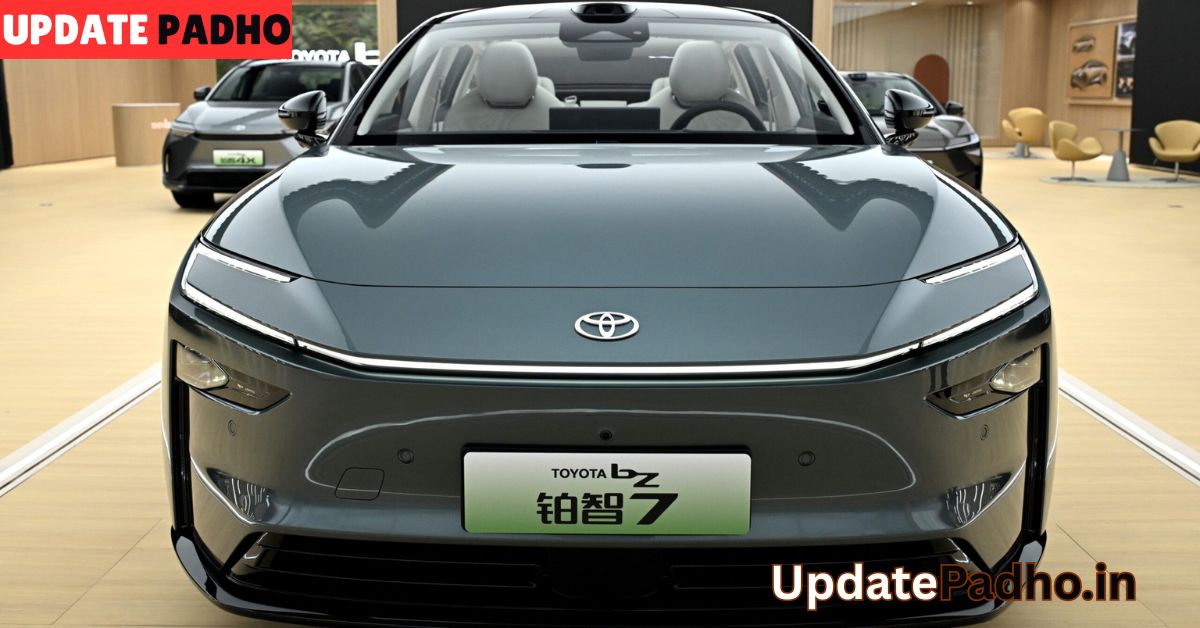
Toyota has long been a pioneer in hybrid and electric mobility, with iconic models like the Prius paving the way for eco-friendly driving. Now, the company is taking a bold step forward with the Toyota bZ7, its flagship electric sedan under the “Beyond Zero” (bZ) series. Scheduled for production in 2025, the bZ7 represents Toyota’s most ambitious EV yet, blending cutting-edge technology with premium design to meet the growing demand for sustainable luxury vehicles.
🌟 Design and Dimensions
The bZ7 is a full-size sedan with a commanding presence:
- Length: 5,130 mm
- Width: 1,965 mm
- Height: 1,506 mm
- Wheelbase: 3,020 mm
Its sleek silhouette, wide stance, and futuristic styling reflect Toyota’s vision of a luxury EV that appeals to both tech-savvy and style-conscious buyers. The design emphasizes aerodynamics, efficiency, and elegance, making it a strong rival to premium EV sedans like the Tesla Model S and NIO ET7.
⚡ Powertrain and Performance
The bZ7 is powered by Huawei’s DriveONE ePowertrain on the rear axle, delivering:

- Output: 207 kW (278 hp)
- Battery: CALB LFP (Lithium Iron Phosphate) pack
- Range: Up to 685 km (426 miles) on a single charge
- Acceleration: 0–100 km/h in 7.5 seconds
- Top Speed: 180 km/h
This combination of performance and efficiency makes the bZ7 ideal for long-distance travel, while its hybrid of Japanese engineering and Chinese innovation highlights Toyota’s global EV strategy.
💡 Features and Technology
Toyota has equipped the bZ7 with advanced features to ensure a premium driving experience:
- All-Wheel Drive (AWD) for stability and control
- Smart infotainment system with AI-powered connectivity
- ADAS (Advanced Driver Assistance Systems) for safety and semi-autonomous driving
- Luxurious interiors with spacious seating and sustainable materials
- Fast-charging capability, reducing downtime for drivers
These features position the bZ7 as not just a car, but a tech-driven mobility solution for the future.
🏭 Production and Market Strategy
The bZ7 will be produced in Guangzhou, China, through Toyota’s joint venture with GAC Toyota. This localization strategy allows Toyota to:

- Tap into the world’s largest EV market.
- Reduce production costs and improve affordability.
- Compete directly with Chinese EV giants like BYD and NIO.
The starting price is expected to be around $36,000 (₹30 lakh approx.), making it competitive in the premium EV segment.
🆚 Competitor Comparison
| Model | Range (km) | Power (hp) | Price (USD) | Key Strengths |
|---|---|---|---|---|
| Toyota bZ7 | 685 | 245–278 | $36,000 | Luxury + Efficiency |
| Tesla Model S | 652 | 670+ | $75,000 | Performance + Brand |
| NIO ET7 | 700 | 653 | $68,000 | Range + Tech |
| BYD Han EV | 605 | 494 | $32,000 | Value + Local dominance |
The bZ7’s competitive pricing and long range make it a strong contender against established EV leaders.
⚖️ Challenges and Opportunities
While the bZ7 is promising, Toyota faces challenges:
- Brand perception: Competing against Tesla’s global EV dominance.
- Infrastructure: Ensuring charging networks keep pace with demand.
- Market competition: Battling local Chinese EV brands with strong footholds.
However, opportunities abound:

- Hybrid legacy: Toyota’s reputation for reliability and efficiency.
- Sustainability push: Growing demand for eco-friendly luxury cars.
- Global expansion: Potential rollout beyond China into Europe and Asia.
🔮 Conclusion
The Toyota bZ7 is more than just a car—it’s a statement of Toyota’s commitment to a zero-emission future. With its blend of luxury, performance, and affordability, the bZ7 is poised to redefine the electric sedan market. As production begins in 2025, it could become a flagship model not only for Toyota but for the entire EV industry, bridging the gap between sustainability and premium mobility.