
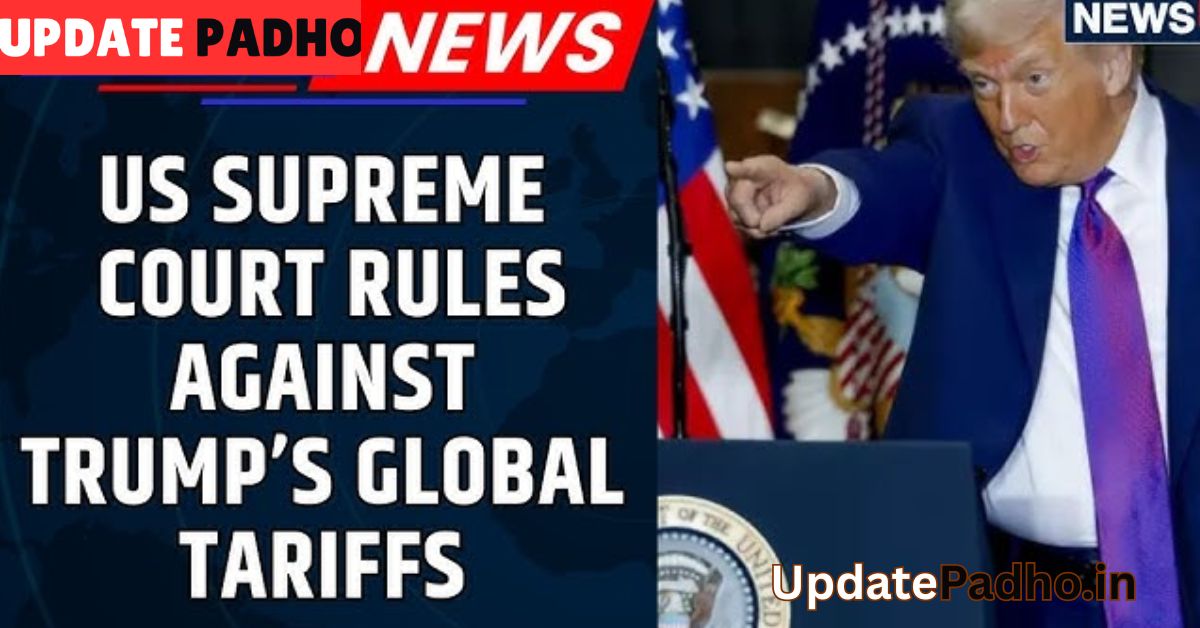
In February 2026, U.S. President Donald Trump announced a sweeping new 10% global tariff on imports, a move that has already sparked intense debate across political, economic, and international circles. The decision comes in the wake of a Supreme Court ruling that struck down many of Trump’s earlier tariffs, forcing the administration to pivot quickly to alternative legal mechanisms. The new tariff, imposed under Section 122 of the Trade Act of 1974, is set to last for 150 days and applies broadly to imports entering the United States.
Why the Tariff Was Imposed
The Supreme Court recently ruled that Trump had exceeded his authority by invoking the International Emergency Economic Powers Act to justify sweeping tariffs. In response, Trump signed an executive order to impose a temporary 10% global tariff under a different legal authority. This move allows him to maintain pressure on trading partners while buying time to explore new avenues for re-imposing duties.
Trump framed the tariff as a way to protect American industries and workers, calling the court’s decision “unpatriotic” and alleging foreign influence in the ruling. While the rhetoric is consistent with his long-standing “America First” trade agenda, the practical implications are far-reaching.
Immediate Impact on Trade
The tariff applies across the board, meaning all imports into the U.S. will face an additional 10% duty unless exempted under separate investigations.

- Consumer Goods: Electronics, clothing, and household items will likely see price increases.
- Automotive Industry: Imported vehicles and parts could become significantly more expensive, affecting both consumers and manufacturers.
- Agriculture: Farmers who rely on imported machinery or fertilizers may face higher costs.
For exporters to the U.S., the tariff represents a direct challenge. Countries that rely heavily on American markets—such as China, Mexico, and Germany—will need to reassess their trade strategies.
Economic Consequences
Economists are divided on the potential outcomes:
- Inflationary Pressure: Higher import costs could fuel inflation, particularly in consumer goods.
- Supply Chain Disruptions: Companies may struggle to adjust sourcing strategies in the short term.
- Domestic Industry Boost: Some U.S. manufacturers may benefit from reduced competition, though gains could be offset by higher input costs.
The temporary nature of the tariff—150 days—adds uncertainty. Businesses may hesitate to make long-term adjustments until it is clear whether the tariff will be extended or replaced by new measures.
International Reactions
Global trading partners have expressed concern, with some signaling potential retaliatory measures. The European Union and Asian economies are closely monitoring the situation, wary of escalating trade tensions.

- Retaliation Risk: Countries may impose counter-tariffs on U.S. exports, affecting American farmers and manufacturers.
- Diplomatic Strain: The move could complicate ongoing negotiations on trade agreements and international cooperation.
- Market Volatility: Financial markets may react to uncertainty, particularly in sectors heavily reliant on global trade.
Political Context
The tariff underscores Trump’s determination to maintain his trade agenda despite judicial setbacks. By invoking Section 122 of the Trade Act, he has found a temporary workaround that allows him to continue imposing duties without congressional approval.
Critics argue that the tariff is politically motivated, designed to project strength in the face of legal challenges. Supporters, however, see it as a necessary step to protect American jobs and industries from unfair competition.
Looking Ahead
The 10% global tariff is scheduled to take effect on February 24, 2026, and will remain in place for five months. During this period, the administration is expected to pursue new investigations that could justify longer-term tariffs under different legal frameworks.
The key questions moving forward are:

- Will the tariff be extended beyond 150 days?
- How will trading partners respond?
- Can U.S. industries absorb the short-term shocks and emerge stronger?
Conclusion
Trump’s new 10% global tariff represents both a continuation of his protectionist trade policies and a tactical response to judicial limits on presidential authority. While it may provide short-term leverage in trade negotiations, the broader economic and diplomatic consequences remain uncertain.
For businesses, consumers, and global partners, the next 150 days will be critical in determining whether this tariff is a temporary disruption or the beginning of a new phase in U.S. trade policy.