
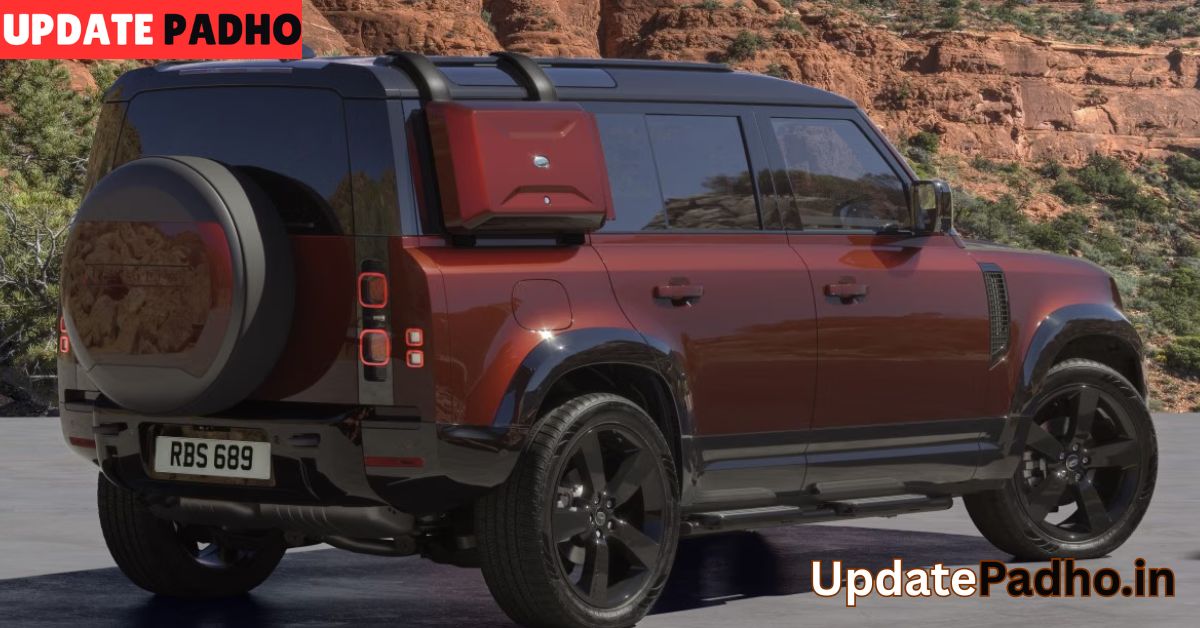
The Land Rover Defender isn’t just a vehicle; it’s a sub-brand that carries the weight of off-road history on its broad, boxy shoulders. Since its rebirth in 2020, the L663 generation has done the unthinkable: it successfully transitioned from a utilitarian farm tool to a luxury status symbol without losing its “go-anywhere” soul.
However, in the automotive world, standing still is the same as moving backward. As we look toward the 2025-2026 model years, the Land Rover Defender Facelift is preparing to break cover. With increased competition from the Mercedes G-Class and the looming wave of high-end electric off-roaders, Land Rover is sharpening its sword.
Evolution, Not Revolution: The Exterior Aesthetic
Land Rover designers face a unique challenge with the Defender: how do you update a design that is already considered a modern classic? The facelift is expected to follow the philosophy of “refinement over replacement.”
- Lighting Signatures: Expect a more technical look for the headlights. The iconic semi-circular LEDs will likely remain, but with high-definition digital matrix technology.
- The “Stealth” Grille: Spy shots suggest a slightly more aerodynamic front fascia. While the Defender will never be a “slippery” car, subtle tweaks to the grille and lower intakes will help with cooling and efficiency.
- New “Octa” Influence: Following the launch of the high-performance Defender Octa, elements of its aggressive wide-body stance and reworked bumpers are expected to trickle down to the standard 90, 110, and 130 variants as part of the mid-cycle refresh.
The Digital Sanctuary: Interior Upgrades
While the exterior stays rugged, the interior is where the facelift will truly earn its keep. The current interior is a masterclass in “industrial chic,” but the tech landscape has shifted rapidly.

1. The Pivi Pro 2.0
The centerpiece will be the latest iteration of the Pivi Pro infotainment system. We expect a larger, curved glass display (similar to the Range Rover Sport) that integrates almost all physical climate controls into the screen. While purists may miss the tactile knobs, Land Rover’s haptic feedback technology aims to make the transition seamless.
2. Sustainable Luxury
In line with JLR’s “Reimagine” strategy, the facelift will likely introduce more non-leather premium textiles. Expect high-end Kvadrat wool blends and Ultrafabrics to be more prominently featured, offering a cabin that is both “mud-proof” and eco-conscious.
Power and Performance: The Hybrid Push
The biggest changes for the Defender facelift lie under the hood. Land Rover is pivoting hard toward electrification, and the engine lineup is being streamlined for a greener future.
| Engine Type | Expected Change |
| P400e (PHEV) | Upgraded battery capacity (likely 25kWh+) for an electric-only range of nearly 80-100 km. |
| D300/D350 Diesel | Further refinement of the mild-hybrid (MHEV) system for better torque delivery at low speeds. |
| The V8 | The BMW-sourced 4.4L Twin-Turbo V8 will likely completely replace the aging 5.0L Supercharged unit across all top-tier trims. |
The “Defender EV” Shadow
While the facelift focuses on Internal Combustion Engines (ICE) and Hybrids, it is laying the groundwork for the all-electric Defender. The facelifted architecture will likely share thermal management components and software logic with the upcoming EV variant, ensuring the transition feels like one cohesive family.

Capability: No Compromise
Land Rover knows that the Defender’s credibility relies on its hardware. The facelift will see an evolution of the 6D Dynamics air suspension system debuted in the Octa. This system hydraulically links the dampers, eliminating the need for traditional anti-roll bars. The result? Unprecedented wheel articulation off-road and sports-car-like levels of body control on the tarmac.
The Terrain Response 2 system will also receive software updates, including a “Cloud-Based Off-Roading” feature that can scout trail conditions via data shared from other Land Rover vehicles in the area.
Why This Facelift Matters
The Defender is currently JLR’s most profitable vehicle. In a market where buyers are increasingly choosing “lifestyle” SUVs over traditional luxury sedans, the Defender occupies the perfect middle ground. It is as comfortable at a gala in Mayfair as it is wading through a river in the Highlands.
By introducing this facelift, Land Rover is addressing the minor gripes of the original—mainly the aging infotainment and the limited EV range of the hybrid—while doubling down on the rugged charisma that made it a hit in the first place.

Final Verdict
The Land Rover Defender Facelift isn’t trying to reinvent the wheel; it’s simply making sure the wheel can turn more efficiently, in more comfort, and over tougher rocks. For those who felt the current model was almost perfect, the 2025/26 updates might just seal the deal.