
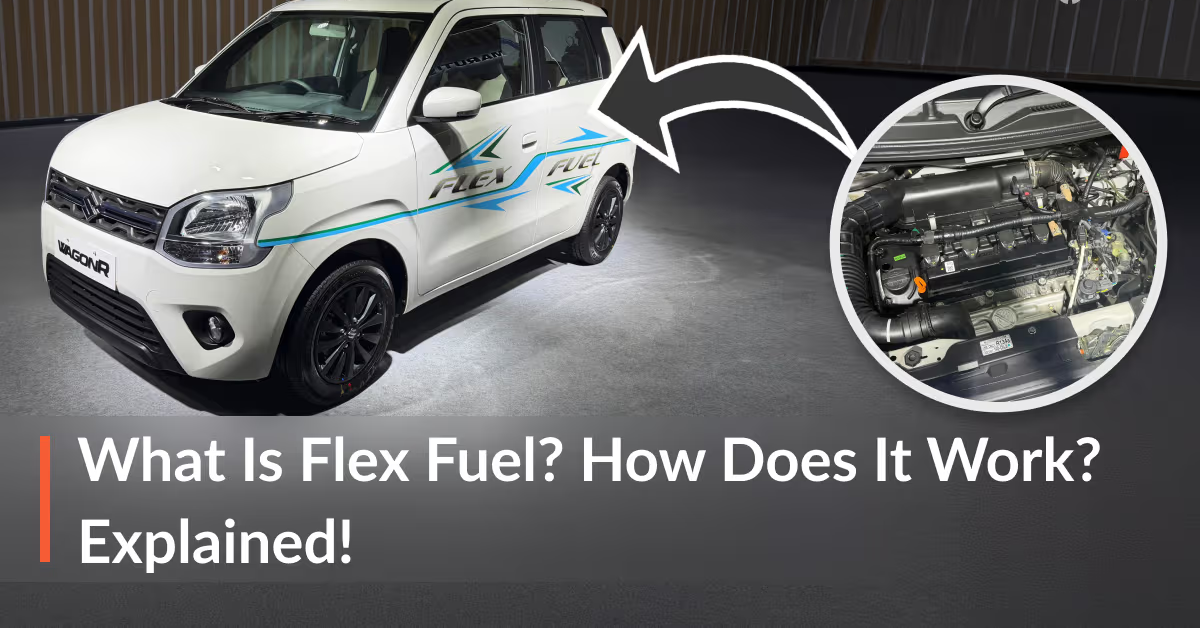
The Indian automobile industry is undergoing one of its biggest transformations in decades. While electric vehicles have captured significant attention, another promising technology is quietly emerging as a practical solution for reducing fuel costs and lowering emissions: Flex Fuel Technology.
Maruti Suzuki has taken a major step toward this future by unveiling the Wagon R Flex Fuel, a vehicle designed to run on both petrol and ethanol-blended fuels. The announcement has generated considerable excitement because it introduces a technology that could offer cleaner mobility without requiring massive changes to existing driving habits or fuel infrastructure.
For many consumers, however, questions remain. What exactly is a flex-fuel vehicle? How does the technology work? Why is it important for India? And could it become the future of affordable mobility?
In this detailed guide, we explain everything you need to know about the Maruti Suzuki Wagon R Flex Fuel and the significance of flex-fuel technology.
What Is a Flex-Fuel Vehicle?
A flex-fuel vehicle is a car equipped with a specially engineered engine and fuel system capable of operating on multiple fuel blends.
Unlike conventional petrol vehicles that are designed for a specific fuel composition, flex-fuel vehicles can automatically adapt to varying mixtures of petrol and ethanol.
In simple terms, drivers can fill the vehicle with:
- Pure petrol
- Ethanol-blended petrol
- High ethanol-content fuel
- Various combinations of petrol and ethanol
The vehicle’s engine management system continuously adjusts performance settings according to the fuel composition inside the tank.
This flexibility gives drivers more fuel options while helping reduce dependence on conventional fossil fuels.
Why Ethanol Is Becoming Important
To understand flex-fuel technology, it’s important to understand ethanol.
Ethanol is a renewable fuel produced from agricultural products such as:
- Sugarcane
- Corn
- Agricultural biomass
- Other plant-based resources
Because ethanol is derived from renewable sources, it is considered a cleaner alternative to traditional petroleum-based fuels.
Benefits of ethanol include:
- Lower carbon emissions
- Renewable production cycle
- Reduced oil dependence
- Support for agricultural industries
- Improved energy security
These advantages have made ethanol a key component of future transportation strategies worldwide.
How Does the Wagon R Flex Fuel Work?
The Wagon R Flex Fuel may look similar to a conventional Wagon R from the outside, but several important engineering changes have been made underneath.
Advanced Fuel Sensors
One of the most important components is the fuel composition sensor.
This sensor constantly monitors the ethanol-to-petrol ratio present inside the fuel tank.
Once the system detects the fuel blend, it immediately communicates the information to the vehicle’s engine control unit.
Intelligent Engine Control Unit
The ECU acts as the brain of the vehicle.
It analyzes fuel composition data and automatically adjusts:

- Fuel injection timing
- Ignition timing
- Air-fuel ratio
- Engine calibration settings
This ensures optimal performance regardless of the fuel mixture being used.
Modified Fuel System Components
Because ethanol has different chemical properties compared to petrol, several components require special engineering.
These include:
- Fuel lines
- Fuel injectors
- Fuel pump
- Fuel tank components
- Sealing materials
The upgraded components ensure long-term durability when exposed to high ethanol concentrations.
Optimized Combustion Process
Flex-fuel engines are calibrated to maximize efficiency and performance across multiple fuel blends.
The combustion process continuously adapts according to fuel characteristics, ensuring smooth operation.
Key Benefits of Wagon R Flex Fuel Technology
The biggest reason behind the growing interest in flex-fuel vehicles is the wide range of benefits they offer.
Lower Running Costs
Fuel expenses represent a major portion of vehicle ownership costs.
Ethanol-based fuels can potentially reduce fuel expenditure compared to conventional petrol.
For daily commuters and high-mileage users, these savings can become significant over time.
Greater Fuel Flexibility
Drivers are no longer restricted to one specific fuel type.
The vehicle can operate efficiently using various fuel blends without requiring manual adjustments.
This flexibility provides convenience and future readiness.
Reduced Environmental Impact
One of the strongest advantages of flex-fuel technology is its environmental benefit.
Compared to conventional fossil fuels, ethanol generally produces lower greenhouse gas emissions.
This helps:
- Improve air quality
- Reduce carbon footprint
- Support sustainability goals
- Promote cleaner transportation
Why India Needs Flex-Fuel Vehicles
India imports a large percentage of its crude oil requirements.
This dependence creates several challenges, including:
- Exposure to global oil price fluctuations
- Increased import bills
- Energy security concerns
Flex-fuel technology can help address these issues.
Reduced Oil Imports
Greater ethanol usage means lower dependence on imported petroleum products.

This can positively impact the country’s economy over the long term.
Support for Farmers
Ethanol production creates additional demand for agricultural products.
As ethanol consumption grows, farmers may benefit from expanded market opportunities.
Strengthening Rural Economy
The ethanol supply chain creates opportunities across:
- Farming
- Transportation
- Processing facilities
- Fuel distribution networks
This contributes to broader economic development.
Performance: Does Ethanol Affect Driving Experience?
Many drivers worry that alternative fuels may negatively impact performance.
Modern flex-fuel vehicles are specifically designed to avoid such issues.
Smooth Engine Operation
Advanced electronic controls ensure seamless operation regardless of fuel blend.
Drivers generally experience:
- Smooth acceleration
- Consistent performance
- Reliable engine response
- Comfortable daily usability
Efficient Power Delivery
The engine management system continuously optimizes performance according to fuel composition.
This helps maintain driving quality across different operating conditions.
Everyday Practicality
For most users, the driving experience remains largely similar to that of a conventional petrol vehicle.
This ease of use is one of flex-fuel technology’s greatest strengths.
How Is Flex Fuel Different from Hybrid and Electric Cars?
Many consumers confuse flex-fuel vehicles with hybrid and electric vehicles.
However, the technologies are fundamentally different.
Flex-Fuel Vehicles
- Use internal combustion engines
- Run on petrol and ethanol blends
- Require traditional refueling
- Utilize existing vehicle architecture
Hybrid Vehicles
- Combine engine and electric motor
- Improve fuel efficiency
- Offer limited electric driving capability
Electric Vehicles
- Operate entirely on electricity
- Require charging infrastructure
- Produce zero tailpipe emissions
Flex-fuel technology provides a practical middle ground between traditional vehicles and fully electric mobility.
Challenges Facing Flex-Fuel Adoption
Despite its advantages, several challenges remain.
Fuel Availability
For widespread adoption, high-ethanol fuels must become readily available across fuel stations nationwide.
Consumer Awareness
Many consumers remain unfamiliar with:
- Ethanol fuel
- Flex-fuel systems
- Ownership benefits
Education will play a crucial role in encouraging acceptance.

Infrastructure Expansion
The fuel distribution network will require continued development to support higher ethanol blends efficiently.
Manufacturing Costs
Automakers must ensure flex-fuel vehicles remain competitively priced for mass-market buyers.
Why Maruti Suzuki’s Move Is Significant
Maruti Suzuki commands a substantial share of the Indian passenger vehicle market.
As a result, any technology adopted by the company tends to receive significant attention.
The Wagon R is particularly important because it is:
- Affordable
- Popular among families
- Widely trusted
- Common in urban and rural markets
Introducing flex-fuel technology in such a mainstream model demonstrates confidence in the technology’s future potential.
It also signals that alternative fuel solutions are moving closer to large-scale adoption.
Could Flex-Fuel Cars Become Mainstream?
The future looks promising.
Several factors support broader adoption:
- Rising fuel prices
- Government support for ethanol blending
- Increasing environmental awareness
- Improved fuel technology
- Expanding ethanol production capacity
As infrastructure improves and more manufacturers introduce flex-fuel models, consumers may increasingly view them as a practical alternative to conventional petrol vehicles.
The Future of Mobility in India
India’s transportation future is unlikely to depend on a single technology.
Instead, multiple solutions will likely coexist, including:
- Electric vehicles
- Hybrid vehicles
- CNG vehicles
- Flex-fuel vehicles
- Hydrogen technologies
Among these options, flex-fuel vehicles offer one of the easiest transitions because they require minimal changes in consumer behavior.
Drivers can continue using familiar refueling practices while benefiting from cleaner and potentially cheaper fuel alternatives.
Final Verdict
The Maruti Suzuki Wagon R Flex Fuel represents much more than just another vehicle launch. It showcases a technology that could play a crucial role in India’s journey toward cleaner, more sustainable, and cost-effective transportation.
By combining fuel flexibility, lower emissions, reduced oil dependence, and support for domestic agriculture, flex-fuel technology offers benefits that extend far beyond individual vehicle owners. The Wagon R Flex Fuel demonstrates how innovation can be practical, affordable, and scalable at the same time.
As fuel prices continue to rise and environmental concerns grow, flex-fuel vehicles could become one of the most important developments in the Indian automotive industry. For millions of consumers looking for a balance between affordability, convenience, and sustainability, the future may very well be powered by ethanol and flex-fuel technology.