
India’s automotive industry is entering a transformative phase as manufacturers increasingly focus on cleaner, more sustainable mobility solutions. While electric vehicles have received much of the spotlight in recent years, alternative fuels are also emerging as an important part of the country’s long-term transportation strategy. Among these alternatives, ethanol-based fuels are gaining significant attention.
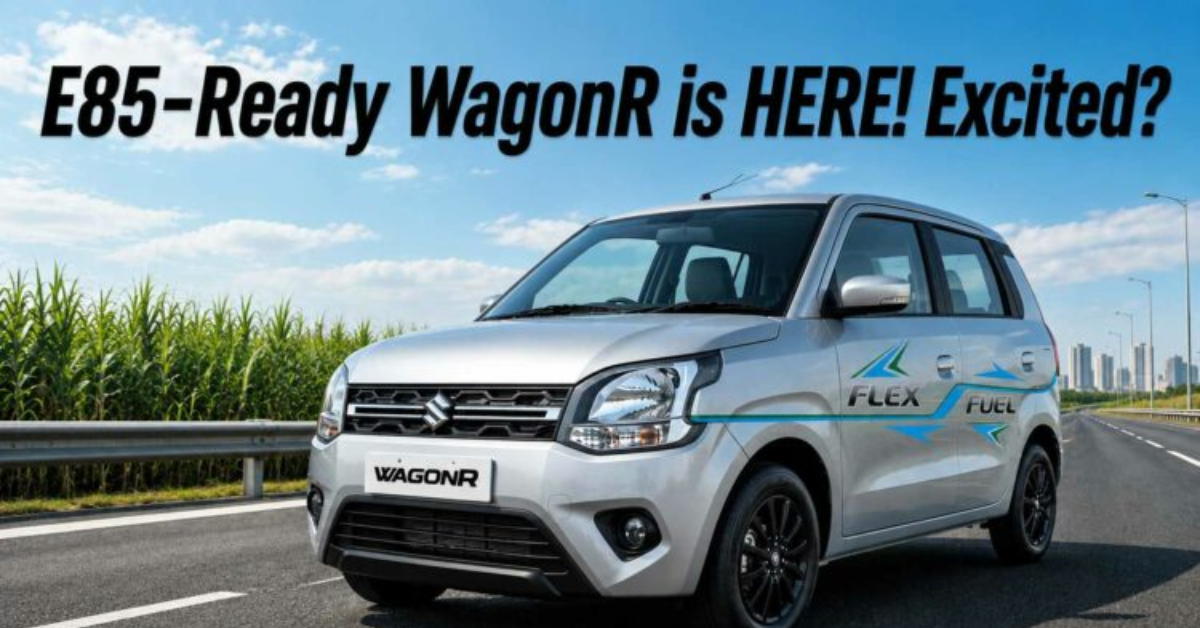
Maruti Suzuki has now taken a major step toward this future by unveiling a production-spec E85-ready WagonR. The move signals the company’s strong commitment to ethanol-powered mobility and highlights the growing importance of flex-fuel technology in India.
For millions of Indian car buyers, the WagonR has long represented affordability, practicality, and reliability. With the introduction of an E85-compatible version, the popular hatchback could become a symbol of India’s transition toward cleaner and more cost-effective transportation.
Let’s explore what the E85-ready WagonR brings to the table and why this development could have a significant impact on the future of mobility.
Understanding E85 Fuel
Before discussing the vehicle itself, it is important to understand what E85 fuel actually is.
E85 is a fuel blend that consists of approximately:
- 85% ethanol
- 15% petrol
Ethanol is a renewable fuel produced primarily from agricultural sources such as sugarcane, corn, and other biomass materials.
Unlike conventional petrol, ethanol is considered a renewable energy source because it can be continuously produced through agricultural cultivation and processing.
The use of higher ethanol blends helps reduce dependence on fossil fuels while supporting cleaner transportation solutions.
What Is a Flex-Fuel Vehicle?
A Flex-Fuel Vehicle (FFV) is designed to operate using different combinations of petrol and ethanol.
Unlike traditional petrol-powered vehicles, FFVs can automatically adjust engine settings based on the fuel mixture being used.
This flexibility allows drivers to use:
- Conventional petrol
- Lower ethanol blends
- Higher ethanol blends such as E85
without experiencing major performance issues.
The production-spec WagonR E85 demonstrates how flex-fuel technology can be integrated into a practical and affordable vehicle for everyday consumers.
Why Maruti Suzuki Is Investing in Ethanol
Maruti Suzuki’s decision to invest heavily in ethanol technology is driven by several important factors.
Reducing Fuel Import Dependence
India imports a substantial portion of its crude oil requirements.
By promoting ethanol-based fuels, the country can reduce dependence on imported fossil fuels and improve energy security.
Supporting Sustainability Goals
Ethanol produces lower lifecycle emissions compared to traditional petrol.
This aligns with broader environmental objectives aimed at reducing carbon emissions from the transportation sector.

Supporting Agricultural Growth
Ethanol production relies heavily on agricultural feedstocks.
Greater ethanol demand can create additional opportunities for farmers and strengthen rural economies.
Offering Affordable Mobility
Higher ethanol blends may help reduce running costs, making transportation more affordable for consumers.
These advantages make ethanol an attractive solution for both policymakers and vehicle manufacturers.
Familiar WagonR, Revolutionary Technology
One of the most interesting aspects of the E85-ready WagonR is that it maintains the practical character that made the hatchback so popular.
Compact Yet Spacious
The WagonR continues to offer:
- Excellent headroom
- Practical cabin space
- Easy entry and exit
- Urban-friendly dimensions
These characteristics remain highly valued by Indian families.
Proven Everyday Practicality
The tall-boy design has always been one of the WagonR’s biggest strengths.
It provides:
- Comfortable seating
- Efficient use of cabin space
- Good visibility
- Easy maneuverability
The addition of flex-fuel technology enhances the vehicle without compromising these core strengths.
Engineering Changes for E85 Compatibility
Operating on E85 fuel requires specific engineering modifications.
Ethanol-Resistant Components
Ethanol behaves differently from petrol and can affect certain materials.
The E85-ready WagonR is expected to feature:
- Special fuel lines
- Corrosion-resistant components
- Enhanced fuel system materials
- Optimized seals and connectors
These upgrades ensure long-term durability.
Advanced Engine Management System
The vehicle’s engine control unit can automatically detect fuel composition and adjust parameters accordingly.
This allows:
- Efficient combustion
- Consistent performance
- Reliable operation
- Improved fuel management
Such technology is essential for flex-fuel vehicles.
Optimized Fuel Injection
The fuel delivery system is specifically calibrated to handle varying ethanol concentrations while maintaining smooth operation.
Environmental Benefits of E85 Technology
One of the biggest advantages of E85 fuel is its environmental impact.

Lower Carbon Emissions
Because ethanol is derived from renewable agricultural sources, it can help reduce greenhouse gas emissions over its lifecycle.
Cleaner Combustion
Ethanol burns more cleanly than conventional petrol, resulting in lower emissions of certain pollutants.
Sustainable Energy Source
Unlike finite fossil fuel reserves, ethanol can be produced continuously through agricultural cultivation.
These factors make E85 an important component of future sustainable transportation systems.
Potential Running Cost Benefits
Fuel expenses remain one of the largest ownership costs for vehicle owners.
Affordable Fuel Alternative
If ethanol pricing remains competitive, drivers could potentially benefit from:
- Lower fuel expenses
- Reduced operating costs
- Improved long-term savings
Fleet and Commercial Benefits
Businesses operating large vehicle fleets may particularly benefit from reduced fuel expenditures.
This could accelerate the adoption of flex-fuel vehicles across commercial sectors.
Safety and Reliability Expectations
Maruti Suzuki has built a reputation for reliability, and the E85-ready WagonR is expected to maintain that standard.
Extensive Testing
Flex-fuel vehicles undergo extensive testing to ensure compatibility with different fuel blends.
This includes evaluation of:
- Engine performance
- Fuel system durability
- Cold-start behavior
- Long-term reliability
Proven Platform
By introducing flex-fuel technology on an already successful platform, Maruti can leverage years of engineering experience and customer feedback.
What This Means for Indian Consumers
The introduction of a production-ready E85 WagonR could bring several benefits to consumers.
More Fuel Choices
Drivers may gain greater flexibility in selecting fuel options based on availability and pricing.
Future-Ready Ownership
As ethanol infrastructure expands, owners of flex-fuel vehicles could be better positioned for future fuel transitions.
Affordable Green Mobility
Unlike some advanced technologies that come with significant cost increases, flex-fuel solutions may offer a more accessible path toward sustainable transportation.
Impact on the Indian Automotive Industry
Maruti Suzuki’s move could influence the broader industry in several ways.
Encouraging Competitors
Other manufacturers may accelerate their own flex-fuel programs to remain competitive.
Expanding Ethanol Infrastructure
Increased vehicle demand could encourage fuel providers to expand ethanol distribution networks.

Driving Innovation
The success of flex-fuel technology could inspire further investments in alternative fuel research and development.
Challenges That Need to Be Addressed
While the prospects are promising, certain challenges remain.
Fuel Availability
Widespread E85 adoption requires a robust network of ethanol fuel stations.
Consumer Awareness
Many buyers are still unfamiliar with flex-fuel technology and its benefits.
Infrastructure Expansion
Fuel distribution systems must continue evolving to support higher ethanol blends nationwide.
Addressing these challenges will be essential for long-term success.
Why the WagonR Is the Perfect Starting Point
The WagonR is one of India’s most recognizable and trusted cars.
Its strengths include:
- Wide customer base
- Proven reliability
- Affordable ownership
- Strong service network
- Everyday practicality
Introducing E85 technology through such a popular model increases the likelihood of broader consumer acceptance.
The Future of Ethanol Mobility in India
The unveiling of the production-spec E85-ready WagonR may represent only the beginning.
In the coming years, India could witness:
- More flex-fuel vehicle launches
- Greater ethanol production
- Expanded fuel infrastructure
- Lower transportation emissions
- Increased energy independence
These developments would contribute significantly to the country’s long-term mobility goals.
Conclusion
The production-spec Maruti Suzuki WagonR E85 marks a significant milestone in India’s journey toward cleaner and more sustainable transportation. By combining a trusted mass-market vehicle with advanced flex-fuel technology, Maruti Suzuki is demonstrating that alternative fuel solutions can be practical, affordable, and accessible.
With potential benefits ranging from lower emissions and reduced oil dependency to support for agriculture and improved fuel flexibility, the E85-ready WagonR could play a key role in shaping the future of Indian mobility. While challenges such as infrastructure expansion and consumer awareness remain, the vehicle represents an important step toward a more sustainable automotive ecosystem.
As ethanol adoption grows and flex-fuel technology becomes increasingly mainstream, the WagonR could once again prove why it remains one of India’s most influential and forward-thinking automobiles.